"...I Love INLNews.com.......INLnews.com is easy to find but hard to leave....".. Mr Wijat's friend Magic Rabbit http://www.easterlingentertainment.net
Inspirational Quote"The
beginning of love is to let those we love be perfectly themselves, and
not to twist them to fit our own image. Otherwise we love only the
reflection of ourselves we find in them.? Thomas Merton"
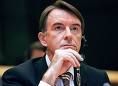
Lord Mandelson has had a cup of green custard thrown in his face by an environmental protester. Skip related content
Campaign group Plane Stupid said 29-year-old activist Leila Deen carried out the stunt as the Business Secretary arrived at the launch of the Government's low carbon economy summit.
Scotland Yard said it has launched an inquiry into the "slime" attack.
Asked about the incident, Lord Mandelson said: "She was so busy throwing what seemed like green soup or something in my face that she failed to tell me what the protest was about, but as you can see thankfully is wasn't paint and I've come through it intact."
Ms Deen, who calmly walked away after the incident, said: "The only thing green about Peter Mandelson is the slime coursing through his veins.
"That Mandelson is trying to make political capital out of climate change just days after reports that he met with BAA's top lobbyists to push through the third runway is an insult to my generation."
Ms Deen accused Lord Mandelson of only representing business interests, adding that he was an unelected Government representative.
The police move comes after former Deputy Prime Minister John Prescott branded the attack "unacceptable".
Mr Prescott - who has been the target of similar protests in the past - insisted Ms Deen should have been arrested for assault on the spot.
"What is totally unacceptable is the way the woman walked away, claiming it was her right in democracy. She should have been arrested. It is not acceptable that she should be allowed to walk away after an assault," he said on his video blog.
"If it had been acid, would she still be walking away?
After the slime attack, Lord Mandelson quickly walked into the building where the summit is being held after the incident and emerged a few minutes later, minus his coat.
He said: "If anybody doubted the greening of Peter Mandelson and his willingness to take the green agenda on his shoulders we've seen it in practice on our television screens already this morning."
Plane Stupid has launched a series of high profile stunts in recent years against the Government's environmental policies.
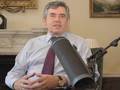
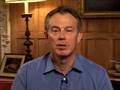
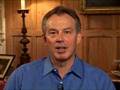
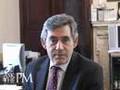
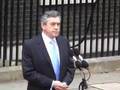
The Three men behind putting
the British Economy back on track in 2009
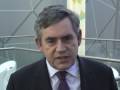
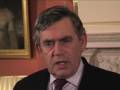
Prime Minister of Britain The Rt Hon. Dr. James Gordon Brown MP (1997–present)MP
The Prime Minister of the United Kingdom of Great Britain and Northern Ireland is the political leader of the United Kingdom and the Head ofHis/Her Majesty's Government. The Prime Minister and Cabinet (consisting of all the most senior government department heads) are collectively accountable for their policies and actions to the Sovereign, to Parliament (of which they are members), to their political party, and ultimately the electorate.
The United Kingdom does not have a written constitution. The position of Prime Minister is the result of political evolution, rather than legislation.
Modern Prime Ministers have few statutory powers but, provided they can
command the support of their parliamentary party, they can control both
the legislature (the House of Commons) and the executive (the Cabinet) and hence wield considerable de facto powers.
The current Prime Minister of the United Kingdom is Gordon Brown.
General
Elections are held every five years at a minimum, but may be held
sooner. The Prime Minister is by convention the leader of the
victorious party. No term limits are imposed on the office.
There are several ways to make your views known to the Prime Minister.
Write to Number 10
You can write to the PM at the following address:
10 Downing Street,
London,
SW1A 2AA
Email Number 10
We have decided at this time that it is important to take another
look at the E-mail Number 10 service to ensure that it meets the same
high standards as the other content and communication measures that the
website delivers.
Unfortunately, this means that we will be unable to replace the
service as quickly as we had hoped, but we aim to have it up and
running as soon as possible. Please accept our apologies for any
inconvenience caused.
Fax Number 10
You can fax the Prime Minister on 020 7925 0918. (From outside the UK, the number is +442079250918)
You may also wish to approach a government department or agency
directly. Some departments now operate e-mail and telephone enquiry
points, and some ministers also have e-mail addresses.
Read a list of which departments are responsible for which issues, including departmental e-mail and postal addresses.
The Chancellor of the Exchequer is the title held by the British Cabinetminister who is responsible for all economic and financial matters. Often simply called The Chancellor, the office-holder controls HM Treasury and plays a role akin to the posts of Minister of Finance or Secretary of the Treasury in other nations. The position is considered one of the four Great Offices of StatePrime Minister. The office is the only remaining one of the four Great Offices of State to have never been filled by a woman. and in recent times has come to be the most powerful office in British politics after the
The Chancellor is the third oldest major state office in English and British history, one which originally carried responsibility for the Exchequer, the medieval English institution for the collection of royal revenues. The Chancellor controlled monetary policy as well as fiscal policyBank of England was granted independent control of its interest rates. The Chancellor also has oversight of public spending across Government departments. until 1997, when the
Secretary of State for Business,
Enterprise & Regulatory Reform for Britain
Known as BERR Lord Mandelson was appointed Secretary of
State for Business, Enterprise & Regulatory Reform on 3 October 2008.
BERR Autumn Performance Report 2008
The BERR Autumn Performance Report
2008 gives the first public assessment of progress against our
Departmental Strategic Objectives, and the Public Service Agreements
for which BERR leads delivery, set at the 2007 Comprehensive Spending
Review.
Digital Britain
Digital Britain (external link)
is an action plan to secure the UK’s place at the forefront of
innovation, investment and quality in the digital and communications
industries.
Action for Business
Our Action for Business programme is focused on helping UK business overcome current financial and economic challenges.
Welcome to the Number10 YouTube channel. This is where you'll find
exclusive films and features from Downing Street and the British Prime
Minister.
NEW:
The Prime Minister has launched a regular initiative, 'Ask the PM',
where he will be responding to the most popular questions submitted by
the YouTube community. Submit videos on this channel by clicking the
gadget to the right.
Brown's time as Chancellor was marked by major reform of Britain's
monetary and fiscal policy architecture, transferring interest rate
setting powers to the Bank of England, by a wide extension of the powers of the Treasury
to cover much domestic policy, and by largely benign economic
conditions. His most controversial moves were the abolition of Advanced
Corporation Tax (ACT) relief in his first budget - a move that received
criticism for the effect it had on pension funds [6] - and removal of the 10p tax rate in his final 2007 budget.[7]
His time as PM has been of mixed fortune, facing repercussions of the credit crunch and the associated nationalisation of Northern Rock,
the 10p tax rate row, rising oil and petrol prices, and increased
inflation. Brown has also suffered as a result of investigations into
improper party donation accusations, a costly political battle over 42 day detention and heavy by-election defeats, notably Glasgow East.
Despite an initial increase in personal and Labour popularity following
his appointment as Leader and PM, Brown has presided over a dramatic
decline in poll approval ratings personally and for the party.[8] During the summer of 2008 speculation arose of a potential challenge to Brown's leadership,[9] but the threat of a contest receded during October following the Labour Party Conference, the emergence of the financial crisis[10] and Labour's win in Glenrothes after a string of by-election loses.
Early life and career before parliament
Gordon Brown was born in Govan, Glasgow, Scotland.[11] His father was John Ebenezer Brown (1914–1998), a minister of the Church of Scotland and a strong influence on Gordon.[12] His mother Jessie Elizabeth Souter, known as Bunty, died in 2004 aged 86.[13] She was the daughter of John Souter, a timber merchant.[14] Gordon was brought up with his brothers John and Andrew Brown in a manse in Kirkcaldy — the largest town in Fife, Scotland across the Firth of Forth from Edinburgh.[15] In common with many other notable Scots,
he is therefore often referred to as a "son of the manse". Brown was
educated first at Kirkcaldy West Primary School where he was selected
for an experimental fast stream education programme, which took him two years early to Kirkcaldy High School for an academic hothouse education taught in separate classes.[16] At age 16 he wrote that he loathed and resented this "ludicrous" experiment on young lives.[17]
He was accepted by the University of Edinburgh to study history at the age of only 16. He suffered a retinal detachment after being kicked in the head during an end-of-term rugby unionblind
in his left eye, despite treatment including several operations and
lying in a darkened room for weeks at a time. Later at Edinburgh, while
playing tennis, he noticed the same symptoms in his right eye. Brown underwent experimental surgery at Edinburgh Royal Infirmary and his eye was saved.[18] Brown graduated from Edinburgh with First Class HonoursMA in 1972, and stayed on to complete his PhD (which he gained in 1982), titled The Labour Party and Political Change in Scotland 1918-29.[19] match at his old school. He was left
After the sudden death of Labour leader John Smith in May 1994, Brown was tipped as a potential party leader,[25] but did not contest the leadership after Tony Blair became favourite. It has long been rumoured a deal was struck between Blair and Brown at the former Granita restaurant in Islington, in which Blair promised to give Brown control of economic policy in return for Brown not standing against him in the leadership election.[26] Whether this is true or not, the relationship between Blair and Brown has been central to the fortunes of "New Labour", and they have mostly remained united in public, despite reported serious private rifts.[27]
As Shadow Chancellor, Brown worked to present himself as a fiscally
competent Chancellor-in-waiting, to reassure business and the middle
class that Labour could be trusted to run the economy without fuelling inflation,
increasing unemployment, or overspending — legacies of the 1970s. He
publicly committed Labour to following the Conservatives' spending
plans for the first two years after taking power.[28][29]
Brown's ten years and two months as Chancellor of the Exchequer made him the longest-serving Chancellor in modern history.[18]
The Prime Minister's website singles out three achievements in
particular from Brown's decade as Chancellor: presiding over "the
longest ever period of growth", making the Bank of England independent
and delivering an agreement on poverty and climate change at the G8 summit in 2005.[19]
However, critics of Brown's record as Chancellor point out that he was
fortunate to inherit a strong economy from the Conservatives.[31]
Spending: Once the two-year period of following the
Conservatives' spending plans was over, Brown's 2000 Spending Review
outlined a major expansion of government spending, particularly on health and education. In his April 2002 budget, Brown raised national insurance to pay for health spending. Brown changed tax policy in other ways, such as the working tax credits.[33][34]
Growth: An OECD report[35] shows UK economic growth averaged 2.7% between 1997 and 2006, higher than the Eurozone's 2.1%, though lower than in any other English-speaking country. UK unemployment is 5.5%,[36] down from 7% in 1997 and lower than the Eurozone's average of 8.1%.
Euro: In October 1997, Brown took control of the United
Kingdom's membership of the European single currency issue by
announcing the Treasury would set five economic tests[37] to ascertain whether the economic case had been made. In June 2003 the Treasury indicated the tests had not been passed.[38]
Gold sales: Between 1999 and 2002 Brown sold 60% of the UK's gold reserves at $275 an ounce.[39] It was later attacked as a "disastrous foray into international asset management"[40] as he had sold at close to a 20-year low. He pressured the IMF to do the same,[41] but it resisted. The gold sales have earned him the pejorative nicknameGolden Brown', after the song by The Stranglers.[42] '
Spectrum auctions: Under Brown, telecomradio frequencyauctions
gathered £22.5 billion for the government. By using a system of sealed
bids and only selling a restricted number of licences, they extracted
high prices from the telecom operators.[43]Germanyrecession in the European telecoms development industry (2001 Telecoms crash) with the loss of 100,000 jobs across Europe, 30,000 of those in the UK.[44] But, as Paul Klemperer,
one of the designers of the auctions, points out, "[t]he United States
held no 3G auctions, yet telecoms companies lost just as much: in fact,
they lost more."[45] at this time applied a similar auction; some allege that these together caused a severe
Debt relief and development: Brown believes it is appropriate to remove much of the unpayable Third World debt but does not think all debt should be wiped out.[46] On 20 April 2006, in a speech to the United Nations Ambassadors, Brown outlined a "Green" view of global development.
Tax
In the 1997 election and subsequently, Brown pledged to not increase the basic or higher rates of income tax.
Over his Chancellorship, he reduced the basic rate from 23% to 20%.
However, in all but his final budget, Brown increased the tax
thresholds in line with inflation, rather than earnings, resulting in fiscal drag. Corporation tax fell under Brown, from a main rate of 33% to 28%, and from 24% to 19% for small businesses.[47]
In 1999, Brown introduced a lower tax band of 10%. He abolished this in his last budget in 2007 to reduce the basic rate from 22% to 20%, increasing tax for 5 million people,[48] and, according to the Institute for Fiscal Studies leaving those earning between under £18,000 as the biggest losers.[49]
Analysis of policies as chancellor
Growth: Brown states that his chancellorship had seen the longest period of sustained economic growth in the history of the United Kingdom.[50][51] The details in Brown's growth figures have been challenged.[52][53]
Anti-poverty: The Centre for Policy Studies
found that the poorest fifth of households, which accounted for 6.8% of
all taxes in 1996–7, accounted for 6.9% of all taxes paid in 2004-5.
Meanwhile, their share of state benefit payouts dropped from 28.1% to
27.1% over the same period.[54]
Tax: According to the OECD UK taxation has increased from a 39.3% share of gross domestic product in 1997 to 42.4% in 2006, going to a higher level than Germany.[55] This increase has mainly been attributed to active government policy, and not simply to the growing economy.
Pensions: Conservatives have accused Brown of imposing "stealth taxes". A commonly reported example resulted in 1997 from a technical change in the way corporation tax is collected, the indirect effect of which was for the dividends on stock investments held within pensions to be taxed, thus lowering pension returns and contributing to the demise of some pension funds.[56] The Treasury contend that this tax change was crucial to long-term economic growth.
Other policy stances as chancellor
Higher education: In 2000, Brown started a political row about higher educationLaura Spence Affair) when he accused the University of Oxford of elitism in its admissions procedures, describing its decision not to offer a place to state school pupil Laura Spence as "absolutely outrageous".[57]Lord Jenkins, then Oxford Chancellor and himself a former Labour Chancellor of the Exchequer, said "nearly every fact he used was false."[58] (referred to as the
Anti-racism and popular culture: During a diplomatic visit to India in January 2007, Brown responded to questions concerning perceived racism and bullying against Bollywood actress Shilpa Shetty on the British reality TV show Celebrity Big Brother
saying, "There is a lot of support for Shilpa. It is pretty clear we
are getting the message across. Britain is a nation of tolerance and
fairness."[59] He later said the debate showed Britain wanted to be "defined by being a tolerant, fair and decent country."[60]
Links with nuclear power industry
A link was reported between Brown's brother Andrew and one of the main nuclear lobbyists, EDF Energy,[61] given the finding that the government did not carry a proper public consultation on the use of nuclear power in its 2006 Energy Review.[62] Attention has also been drawn to the fact[63] that the father-in-law of Brown's closest adviser Ed Balls, Tony Cooper (father of the Labour minister Yvette Cooper) has close links with the nuclear industry. Cooper was described as an "articulate, persuasive and well-informed advocate of nuclear power over the last ten years"
by the Nuclear Industry Association on his appointment as Chairman of
the British Nuclear Industry Forum in June 2002. He is also a member of
the Nuclear Decommissioning Authority and was appointed to the Energy Advisory Panel by the previous Conservative administration.[64]
In October 2004 Tony Blair announced he would not lead the party into a fourth general election, but would serve a full third term.[65] Political controversy over the relationship between Brown and Blair continued up to and beyond the 2005 election,
which Labour won with a reduced parliamentary majority and reduced vote
share. The two campaigned together but the British media remained — and
remains — full of reports on their mutual acrimony.
Blair, under pressure from within his own party, announced on 7 September 2006 that he would step down within a year.[66] Brown was the clear favourite to succeed Blair for several years with experts and the bookmakers; he was the only candidate
spoken of seriously in Westminster. Appearances and news coverage
leading up to the handover were interpreted as preparing the ground for
Brown to become Prime Minister, in part by creating the impression of a statesman with a vision for leadership and global change.
Blair famously described Brown as the "great clunking fist", supposedly
as a warning to his political opponents. Sceptics have said Blair's
description was a deliberate attempt to label Brown as an unsubtle and
one-dimensional policial operator.
On 9 September 2006 Charles Clarke said in an interview that the Chancellor had "psychological" issues he must confront and accused him of being a "control freak"
and "totally uncollegiate". Brown was also "deluded", Clarke said, to
think Blair can and should anoint him as his successor now.[68] Environment Secretary David Miliband stressed his support for Brown.[69]
From January 2007 the media reported Brown had now "dropped any
pretence of not wanting, or expecting, to move into Number 10 in the
next few months" — although he and his family use the more spacious 11 Downing Street.[70] This enabled Brown to signal the most significant priorities for his agenda as Prime Minister; speaking at a Fabian Society
conference on 'The Next Decade' in January 2007, he stressed education,
international development, narrowing inequalities (to pursue 'equality
of opportunity and fairness of outcome'), renewing Britishness,
restoring trust in politics, and winning hearts and minds in the war on
terror as key priorities.[71]
In March 2007 Brown's character was attacked by Lord Turnbull who worked for Brown as Permanent Secretary
at the Treasury from 1998 to 2002. Turnbull accused Brown of running
the Treasury with "Stalinist ruthlessness" and treating Cabinet
colleagues with "more or less complete contempt".[72] This was especially picked-up on by the British media as the comments were made on the eve of Brown's budget report.
Brown has proposed moving some traditional prime ministerial powers conferred by royal prerogative
to the realm of Parliament, such as the power to declare war and
approve appointments to senior positions. Brown wants Parliament to
gain the right to ratify treaties and have more oversight into the
intelligence services. He has also proposed moving some powers from
Parliament to citizens, including the right to form "citizens' juries",
easily petition Parliament for new laws, and rally outside Westminster.
He has asserted that the attorney general should not have the right to
decide whether to prosecute in individual cases, such as in the loans for peerages scandal.[74]
During his Labour leadership campaign, Brown proposed some policy
initiatives, suggesting that a Brown-led government would introduce the
following:[75][76]
End to corruption: Following the cash for honours
scandal, Brown emphasised cracking down on corruption. Brown has
announced a new ministerial code which sets out clear standards of
behaviour for ministers.[77]
Constitutional reform: Brown has not stated whether he proposes a U.S.-style written constitution
— something the UK has never had — or a looser bill of rights. He said
in a speech when announcing his bid that he wants a “better
constitution” that is “clear about the rights and responsibilities of
being a citizen in Britain today”. He plans to set up an all-party
convention to look at new powers for Parliament. This convention may
also look at rebalancing powers between Whitehall
and local government. Brown has said he will give Parliament the final
say on whether British troops are sent into action in future.
Housing: House planning restrictions are likely to be
relaxed. Brown said he wants to release more land and ease access to
ownership with shared equity schemes. He backed a proposal to build new
eco-towns, each housing between 10,000 and 20,000 homeowners — up to 100,000 new homes in total.
Health: Brown intends to have doctors' surgeries open at the
weekends, and GPs on call in the evenings. Doctors were given the right
of opting out of out-of-hours care two years ago, under a controversial
pay deal, signed by then-Health Secretary John Reid,
which awarded them a 22% pay rise in 2006. Brown stated that the NHS
was his "top priority", yet he had just cut the capital budget of the
English NHS from £6.2bn to £4.2bn.[78]
The Brown government was involved in controversy in April 2008 over
the decision to scrap the 10p Income Tax Band and he was forced into
making concessions. In the local elections on 1 May 2008, Labour
suffered their worst results in 40 years finishing in third place with
a projected 24% share of the national vote.[79]
Subsequently the party has seen the loss of by-elections in Nantwich
and Crewe and Henley as well as slumps in the polls. A by election in
Glasgow East triggered by the resignation of David Marshall saw the
Labour party struggle to appoint a candidate, eventually settling for a
5th choice, a sitting MSP in the Scottish Parliament Margaret Curran.
The SNP, Conservatives and Liberal Democrats have all derided the party
for their disorganised nature with Alex Salmond commenting "This is
their 'lost weekend' - they don't have a leader in Scotland, they don't
have a candidate in Glasgow East, and they have a prime minister who
refuses to come to the constituency".[80]
A former Labour spin doctor has commented that the loss of a safe seat
in Glasgow (one of the safest Labour seats in the country) would
indicate to Gordon Brown that any MP with a majority of less than
13,500 would be unsafe and his position as Prime Minister would be
untenable.[81]
The unthinkable result became a reality when the seat experienced a
massive swing of 22.54% in one of Labours safest heartland areas, and
the constituency was lost to the Scottish National Party's John Mason
who took 11,277 votes with Labour just 365 behind.
Foreign policy
Brown remains committed to the Iraq War, but said in a speech in June 2007 that he would "learn the lessons" from the mistakes made in Iraq.[82]
Brown made his first overseas trip as Prime Minister to Berlin, where he spoke with German Chancellor Angela Merkel.
Many of you know my interest in Israel and in the Jewish community has been long-standing…My father was the chairman of the Church of Scotland's
Israel Committee. Not only as I've described to some of you before did
he make visits on almost two occasions a year for 20 years to Israel —
but because of that, although Fife,
where I grew up, was a long way from Israel with no TV pictures to link
us together — I had a very clear view from household slides and
projectors about the history of Israel, about the trials and
tribulations of the Jewish people, about the enormous suffering and
loss during the Holocaust, as well as the extraordinary struggle that he described to me of people to create this magnificent homeland.[83]
Brown said in a letter published 17 March 2008 that the United Kingdom will hold an inquiry into the Iraq war -- but not soon.[84]British Prime Minister Gordon Brown will skip the opening ceremony of the 2008 Summer Olympics, on 8 August 2008 in Beijing,
it was reported on 9 April 2008. But, he will not be boycotting the
Olympics and will attend the closing ceremony, on 24 August 2008. Brown
has been under intense pressure from human rights campaigners to send a
message to China, concerning the 2008 Tibetan unrest.
But his decision not to attend the opening ceremony is not an act of
protest, the decision was made weeks ago and was not a stand on
principle.[85]
Diplomatic relationship with the U.S.
There has been widespread speculation on the nature of the UK's relationship with the United States under Brown's government. A Washington, D.C. speech by Brown's close aide Douglas Alexander was widely reported as both a policy shift and a message to the U.S:[86]
"In the 21st century, strength should be measured on what we can build
together…we need to demonstrate by our deeds, words and our actions
that we are internationalist, not isolationist, multilateralist, not unilateralist, active and not passive, and driven by core values, consistently applied, not special interests."
However Downing Street's spokesman strongly denied the suggestion that Alexander was trying to distance Britain from U.S. foreign policy and show that Britain would not necessarily, in Tony Blair's words, stand "shoulder to shoulder" with George W. Bush over future military interventions:[87]
"I thought the interpretation that was put on Douglas Alexander's words
was quite extraordinary. To interpret this as saying anything at all
about our relationship with the U.S. is nonsense."
Brown personally clarified his position;[88]"We
will not allow people to separate us from the United States of America
in dealing with the common challenges that we face around the world. I
think people have got to remember that the relationship between Britain and America and between a British prime minister and an American president is built on the things that we share, the same enduring values about the importance of liberty, opportunity, the dignity of the individual. I will continue to work, as Tony Blair did, very closely with the American administration."
The "non-election"
Gordon Brown caused controversy during September and early October
2007 by letting speculation continue on whether he would call a snap general election.
Following the negative reaction to his visit to British troops in Iraq
during the Conservative Conference, David Cameron's 'off the cuff'
speech and an opinion poll showing Labour 6% behind the Conservative
Party in key marginal seats, he finally announced that there would be
no election
in the near future and seemed to rule out an election in 2008. He was
subsequently accused by his political opponents as being a ditherer and
indecisive. Cameron accused Brown of "bottling" the election because of
opinion polls, which Brown denied.[89]
Military covenant
November 2007 saw Brown face intense criticism of not adhering to the 'military covenant',
a convention within British politics stating that in exchange for them
putting their lives at risk for the sake of national security, the
armed forces should in turn be suitably looked after by the government.[90] Criticism has come from several former Chiefs of Defence, including GeneralLord Guthrie, AdmiralLord Boyce, Marshal of the Royal Air ForceLord Craig, Field MarshalLord Bramall and Field MarshalLord Inge.[91][92]
Poor housing, lack of equipment and adequate healthcare provisions are
some of the major issues Brown has been accused of neglecting.
European Union
Brown has continued to be dogged by controversy about not holding a referendum on the EU Treaty of Lisbon. On the morning of 13 December 2007, Foreign Secretary David Miliband
had to stand in for the Prime Minister at the official signing ceremony
in Lisbon of the EU Reform Treaty, which was attended by all other
European heads of government. Brown was otherwise engaged at the House
of Commons, appearing before the Liaison Committee,
and travelled to Portugal to sign the treaty in the afternoon which the
EU leaders had signed in the morning. Brown come under heavy fire from
opponents on both sides of the House and in the press, who suggested
that neither Brown nor Labour had a mandate to ratify the treaty
without public assent. Conservative leader David Cameron pointed to Labour's 2005 manifesto, which had pledged to give British public a referendum on the original EU Constitution.[93][94]
Brown argued that the Treaty significantly differed from the
Constitution, and as such did not require a referendum. He also
responded with plans for a lengthy debate on the topic, and stated that
he believed the document to be too complex to be decided by referendum.[95]
42-Day Detention
Following the rejection of a previous bill under Tony Blair's
government to allow for terror suspects to be detained for up to 90
days without charge,[96] Brown championed a new bill extending this pre-charge detention period to 42 days. The bill was met with hostility on both sides of the House and, facing a growing backbench rebellion, it is alleged[97]
that a number of deals were done behind the scenes to ensure a victory
for Brown in the vote on this issue. In the end, the bill passed with
just 9 votes. Many commentators view this as a pyrrhic victory as Brown
had to rely upon the support of a renegade Conservative MP, Ann Widdecombe, and the votes of a handful of Democratic Unionist MPs. In a session of Prime Ministers' Questions some weeks later, David Cameron
challenged Brown to concede on record that "no deals were done" in
ensuring the bill was passed. Brown stood up before the House and gave
a one-word response of "Yes". To uproar, Cameron proceeded to quote
from a letter written by Geoff Hoon, Labour's Chief Whip, to the Chairman of the Home Affairs Committee, Keith Vaz,
in which Hoon expressed deep thanks for Vaz's support and in addition
signed off the letter with the line "I trust that you will be
appropriately rewarded."[98]
Hoon has claimed that this was just a joke between friends but others
have viewed this letter as proof that deals were indeed done behind the
scenes and that Brown was lying when he went on record as stating that
no such deals were done.[99]
The House of Lords crushingly defeated the law, with Lords
characterising it as "fatally flawed, ill thought through and
unnecessary", stating that "it seeks to further erode [...] fundamental
legal and civil rights".[100]
Plots against leadership
The first signs of internal disquiet towards Brown's policies surfaced as early as May 2008. Brown, in his 2007 budget,
his last as Chancellor, abolished the 10% income tax rate for the
lowest earners (5.1 million people), increasing their rate to the next
highest, 20%. Earners who fell within the 22% tax rate band had their
rate reduced to 20%, and tax allowances were also made for over-65s.[7] These measures came into effect in April 2008. The "10p tax rate cut" as it was commonly referred to, was sharply criticized by Frank Field
and several other backbenchers. Field also made comments saying that
Brown did not seem to be enjoying his job. Health Secretary Alan Johnson believed that Field was motivated primarily by a personal dislike of Brown,[101] and Field later apologized, saying that he had regretted allowing his campaign to "become personal".[102] In the face of protests such as this though, Chancellor Alistair Darling
cut the tax rate for 22 million people, and borrowed around £2.7 bn to
reimburse those on lower and middle incomes who had suffered.[103]
In the summer of 2008, Brown's leadership was presented with a fresh
challenge as a large number of senior MPs openly called for him to
resign. This event was dubbed the 'Lancashire Plot', as two
backbenchers from North West England urged him to step down and a third questioned his chances of holding on to the Labour Party
leadership. Several MPs argued that if Brown did not recover in the
polls by early 2009, he should call for a leadership contest. However,
certain prominent MPs, such as Jacqui Smith and Bill Rammell, suggested that Brown was the right person to lead Britain through its economic crisis.[104]
A second assault upon Brown's premiership was launched in the autumn of that year, when Siobhain McDonagh, a MP who during her time in office had never voted against the government,[105]
spoke of the need for discussion over Brown's position. McDonagh, a
junior government whip, was sacked from her role shortly afterwards, on
September 12. Whilst McDonagh did not state that she wanted Brown
deposed, she implored the Labour party to hold a leadership election.[106]
McDonagh spoke of a "huge number" of Labour MPs who wanted a leadership
election; her views were somewhat substantiated in the following days
when several Labour MPs, including Field, Joan Ryan (who applied, as McDonagh had, for leadership nomination papers, and became the second rebel to be fired from her job), Jim Dowd, Greg Pope, and a string of others who had previously held positions in government, made clear their desire for a contest.[107] In an unrelated incident, 12 backbenchers signed their names to a letter criticizing Brown in Progress magazine.[106]Eric Joyce, one of the MPs who signed this letter, said that Brown's future hinged on his performance at the upcoming Labour party conference.[107]
A Downing Street source responded to these revelations by stating that, "The Blairites
have been talking up the idea of loads of ministers resigning. But the
best they can come up with is an assistant government whip." Tony Lloyd, chairman of the parliamentary Labour Party, labelled the rebellion a "bit of a sideshow",[107] and Emily Thornberry MP called Brown the "best qualified" to lead Britain through the economic crisis of 2008.[106]
The Labour party admitted that it had received letters from a small
number of MPs querying why no nomination papers had been released.[106]
In the face of this growing speculation over Brown's future, the
majority of his ministers also backed him to lead the party, and two, Harriet Harman and David Miliband, vigorously denied that they were preparing leadership bids. After the shock loss that Labour suffered in the Glasgow East by-election
in July, Harman, the deputy leader of the party, suppressed rumours
regarding her intentions, saying that Brown was the "solution", not the
"problem"; Home Secretary Smith, Justice Secretary Jack Straw, Schools Secretary Ed Balls and Cabinet Office Minister Ed Miliband all re-affirmed their support for Brown.[108] The deputy Prime Minister under Blair, John Prescott, also pledged his support.[109]
Foreign Secretary David Miliband was then forced to deny that he was
plotting a leadership bid, when on July 30, an article written by him
in The Guardian
was interpreted by a large number in the media as an attempt to
undermine Brown. In the article, Miliband outlined the party's future,
but neglected to mention the Prime Minister. Miliband, who had been
forced to quell rumours that he would run against Brown in the leadership election of 2007, responded to this by saying that he was confident Brown could lead Labour to victory in the next general election, and that his article was an attack against the fatalism that had dogged the party since the loss of Glasgow-East.[110]
Miliband continued to show his support for Brown in the face of the
challenge that emerged in September, as did Business Secretary John Hutton, Environment Secretary Hilary Benn, and Chief Whip Geoff Hoon.[111]
Depictions of Brown in popular culture
Brown's reputed dourness while holding a high public office comes
across in the way he is portrayed on both the screen — where he was
played by David Morrissey in the Stephen FrearsTV movieThe Deal and by Peter Mullan in the TV movie The Trial of Tony Blair — and stage: he features as a character in the 2007 Musical TONY! The Blair Musical, written by Chris Bush and Ian McCluskey. During its run in York, he was played by Bush, and then by Michael Slater at the 2007 Edinburgh Fringe Festival and subsequently at the Pleasance Theatre in Islington, London. Also drawing on this perception, radio presenter Nick Abbot plays a sound effect of Darth Vader because of the way Gordon Brown's jaw appears to detach as he breathes in. directed
In keeping with its tradition of having a comic strip for every Prime Minister, Private Eye features a comic strip, The Broonites (itself a parody of The Broons), parodying Brown's government. The Eye has also started a column titled Prime Ministerial Decree,[112] a parody of statements that would be issued by Communist governments in the former Eastern Bloc. This is in reference to a criticism of Brown having "Stalinist tendencies".[113]
Gordon Brown was depicted in Season 12 of South Park sitting at a table of world leaders opposite Nicolas Sarkozy in the episode "Canada on Strike". He was portrayed speaking in an English accent, reflecting his alleged jettisoning of his native Scottish accent.[114]
Brown's early girlfriends included the journalist Sheena McDonald, Marion Caldwell[23] and Princess Margarita, the eldest daughter of exiled King Michael of Romania.
She has said about their relationship: "It was a very solid and
romantic story. I never stopped loving him but one day it didn't seem
right any more, it was politics, politics, politics, and I needed
nurturing."[118]
Brown married Sarah Macaulay in a private ceremony at his home in North Queensferry, Fife, on 3 August 2000.[119]
On 28 December 2001, a daughter, Jennifer Jane, was born prematurely
and died on 8 January 2002. Gordon Brown commented at the time that
their recent experiences had changed him and his wife:
I don't think we'll be the same again, but it has made us think of
what's important. It has made us think that you've got to use your time
properly. It's made us more determined. Things that we feel are right
we have got to achieve, we have got to do that. Jennifer is an
inspiration to us.[120]
They have two children, John Macaulay[121] and James Fraser. In November 2006, James Fraser was diagnosed with cystic fibrosis.[122]
Sarah Brown generally keeps a low profile, rarely making official
appearances either with or without her husband, in contrast to Cherie Blair. She is inevitably much sought after to give interviews, although is reluctant to do so.[123] However, she is patron of several charities, and has written articles for national newspapers related to this.[124].
At the 2008 Labour Party Conference, Mrs Brown caused surprise by
taking to the stage to introduce her husband for his keynote address[125].
Despite predictions to the contrary, the Browns have fallen in love with Chequers.
They spend most weekends there, the house often being filled with
friends, editors, sportsmen and actors, as well as politicians. They
have even entertained the Beckhams and local dignitaries like Sir Leonard Figg, revealing a certain "obsession"[126] with the place.
He is also a big fan of heavy metal music, as revealed in the music documentary Anvil, produced by Brown's brother-in-law. [127]
Of his two brothers, John Brown is Head of Public Relations in the Glasgow City Council.[128] His brother Andrew Brown has been Head of Media Relations in the UK for the French-owned utility company EDF Energy since 2004. He was previously director of media strategy at the world's largest public relations firm Weber Shandwick from June 2003 to 2004. Previously he was editor of the Channel 4 political programme Powerhouse from 1996 to 2003, and worked at the BBC[129] from the late 1970s to early 1980s.
Titles and honours
Styles
Mr. James Gordon Brown
Dr. James Gordon Brown (1982–1983)
Dr. James Gordon Brown MP (1983–1997)
The Rt Hon Dr. James Gordon Brown MP (1997–present)
^Wright, Kenyon (1999-04-04). "Scotland can sing a new song to a different tune and in a clear voice".
Sunday Herald. Retrieved on 2008-03-01. "... the Claim of Right of
Scotland. I have it before me now as I write - a note of sadness as I
see that the first two signatures, side by side, are those of the late
John Smith MP and myself, a note of gratified surprise to see these
closely followed by the autographs of Gordon Brown, Robin Cook, George
Robertson, Donald Dewar, Malcolm Bruce, Jim Wallace and, more
important, an impressive cross-section of Scotland's civil society."
^ Webster, Philip (1994-05-13). "Friends Blair and Brown face a difficult decision; Death of John Smith", The Times. Retrieved on 26 March 2007. "As
probably the two most powerful figures in the party, they have the
agonising task of deciding whether they should at last become rivals
and vie for the crown, or whether one should stand aside for the other
to become the centre candidate to succeed Mr Smith."
^ Klemperer, Paul (2004). ""Were Auctions a Good Idea?"". Auctions: Theory and Practice 209. Princeton University Press. Retrieved on 26 November 2008.
(LL.B). He became the head of Aberdeen University Students Union.
Before joining the Labour Party at the age of 23 in 1977, Darling was a
supporter of the
After the creation of the Scottish Parliament the number of Scottish seats at Westminster was reduced, his Edinburgh Central seat was abolished. Since the 2005 election he has represented Edinburgh South West. The Labour Party was so concerned that Darling might be defeated, several senior party figures, including Deputy Prime MinisterJohn Prescott and ChancellorGordon Brown, made supportive visits to the constituency during the election campaign. Despite being a senior Cabinet
minister himself, Darling was hardly seen outside the area, as he was
making the maximum effort to win his seat. In the event, he won it with
a majority of 7,242 over the second-placed Conservative candidate, a
16.49% margin on a 65.4% turnout.
As a backbencher he sponsored the Solicitors (Scotland) Act 1988.[5] He soon became an Opposition Home Affairs spokesman in 1988 on the frontbench of Neil Kinnock.
Following the 1997 General Election
he entered Cabinet as the Chief Secretary to the Treasury; he is one of
only three people who have been in the Cabinet ever since (the others
are Gordon Brown and Jack Straw).
Darling was given a brief to "take the department out of the
headlines" and was widely considered to have achieved this, although he
was also criticised for achieving too little else whilst he held the
transport brief. He oversaw the creation of Network Rail, the successor to Railtrack,
which had collapsed in controversial circumstances for which his
predecessor was largely blamed. He also procured the passage of the
legislation - the Railways and Transport Safety Act 2003 - which abolished the Rail Regulator and replaced it with the Office of Rail Regulation. He was responsible for the Railways Act 2005 which abolished the Strategic Rail Authority, a creation of the Labour government under the Transport Act 2000. Darling was also responsible for the cancellation of several major Light Rail schemes.
Although he was not at the Department for Transport at the time of
the collapse of Railtrack, Darling vigorously defended what had been
done in a speech to the House of Commons on 24 October 2005. This
included the making of threats to the independent Rail Regulator that
if he intervened to defend the company against the government's
attempts to force it into railway administration - a special status for
insolvent railway companies - the government would introduce emergency
legislation to take the regulator under direct political control. This
stance by Darling surprised many observers because during his tenure at
the Department for Transport he had made several statements to
Parliament and the financial markets assuring them that the government
regarded independence in economic regulation of the railways as
essential.
In June 2007, the new Prime Minister Gordon Brown appointed Darling Chancellor of the Exchequer, a promotion widely anticipated in the media. Journalists observed that three of Darling's four junior ministers at the Treasury (Angela Eagle, Jane Kennedy and Kitty Ussher) are female and dubbed his team, "Darling's Darlings".[6]
In September 2007, for the first time since 1860, there was a run on a British bank, Northern Rock. Although the Bank of England and the Financial Services Authority
have jurisdiction in such cases, ultimate authority for deciding on
financial support for a bank in exceptional circumstances rests with
the Chancellor. The 2007 subprime mortgage financial crisis
had caused a liquidity crisis in the UK banking industry, and Northern
Rock was unable to borrow as required by its business model. Darling
authorised the Bank of England to lend Northern Rock funds to cover its
liabilities and provided an unqualified taxpayers’ guarantee of the
deposits of savers in Northern Rock in an attempt to stop the run.
Northern Rock borrowed up to £20 billion from the Bank of England,[7] and Darling was criticized for becoming sucked into a position where so much public money was tied up in a private company.[8] On 12 March 2008, Darling gave his first Budget in the House of Commons.
In March 2008, Alistair Darling was criticised in some circles for
the Budget by a media campaign spread by a social networking site.
James Hughes, the landlord of Utopia Pub
in Edinburgh, symbolically barred Darling from his pub, and a passing
reporter from the Edinburgh Evening News ran the story. A Facebook
group was created, leading dozens of pubs across the UK to follow
Hughes, barring Darling from their pubs.[9]
The story was eventually picked up by most national press and broadcast
media in the UK, and leader of the opposition cited the movement at
Prime Minister's Questions on 26 March.[10]
Darling was Chancellor when the personal and confidential details of
over 25 million British citizens went missing while being sent from his
department to the National Audit Office.
A former Scotland Yard detective stated that with the current rate of
£2.50 per person's details this data could have been sold for £60
million.[11] The acting leader of the Liberal Democrats, Vince Cable, put the value at £1.5bn, or £60 per identity.[12]
Darling’s predecessor, Gordon Brown, before becoming Prime Minister of the United Kingdom,
axed the 10% starting rate of taxation whilst reducing basic rate
income tax from 22% to 20%, in his final budget on 21 March 2007.
Although the majority of tax payers would be marginally better off by
these changes some 5.1 million low earners including those earning less
than £18,000 were worse off. On 18 October 2007 the Treasury released
figures showing that childless people on low incomes could lose up to
£200 a year as a result of the changes, while parents and those earning
more than £20,000 will be better off.
Increasing political backlash to the additional tax burden put
immense pressure onto the government including the new chancellor
Darling with Gordon Brown facing criticism from his own Parliamentary
Labour party. On 13 May 2008 Darling announced he would help low-paid
workers hit by the scrapping of the 10p rate, by raising this year's
personal tax allowance by £600 funded by borrowing £2.7 billion.[13]
In an interview in The Guardian [14]
published 30 August 2008, Alistair Darling warned, "The economic times
we are facing... are arguably the worst they've been in 60 years. And I
think it's going to be more profound and long-lasting than people
thought." His blunt warning led to confusion within the Labour Party. However, Darling insisted that it was his duty to be “straight” with people.[15]
Personal life
Darling has been married to former journalist Margaret McQueen
Vaughan since 1986, and they have one son (Calum, born 1988) and one
daughter (Anna, born 1990). Margaret Vaughan worked for Radio Forth,
the [16]Daily Record and [17]Glasgow Herald until Labour's election victory in 1997. In 2008 Darling was given an honorary position in the University College LondonRed Zone.
Darling's media adviser, the former Herald political journalist,
Catherine MacLeod, is a close friend of Vaughan and Darling, as well as
being a long-standing Labour Party supporter. Darling had a previous
marriage in the 1970s.[18] student movement known only as
Holds overall responsibility for the Department for Business, Enterprise & Regulatory Reform and its policies.
Biography
Lord Mandelson was appointed Secretary of State for Business, Enterprise & Regulatory Reform on 3 October 2008.
Portfolio
Holds overall responsibility for the Department for Business, Enterprise & Regulatory Reform and its policies.
Biography
Lord Mandelson was appointed Secretary of State for Business, Enterprise & Regulatory Reform on 3 October 2008.
He
was born in 1953, and studied Philosophy, Politics and Economics at St
Catherine's College, Oxford. As a young man he lived in Tanzania for a
year, an experience which formed life-long impressions of Africa and
the challenges of fighting poverty. A life-long pro-European, he led
the British delegation to the first ever meeting of the European
Communities Youth Forum in Strasbourg in 1979.
After working as
an economist at the Trades Union Congress and as a current affairs TV
producer, Peter Mandelson was later appointed Labour Party Director for
Campaigns and Communications in 1985.
In 1992 he was elected as
member of parliament for the constituency of Hartlepool. He served
until his appointment to the European Commission in 2004.
He was
appointed to the Cabinet as Secretary of State for Trade and Industry
in 1998, where he was responsible for the introduction of the National
Minimum Wage and overseeing new measures to strengthen regional
development through the creation of Regional Development Agencies.
During his tenure, he also published the Government's Competitiveness
White Paper - "Building the Knowledge-Driven Economy".
In 1999 he
was appointed Secretary of State for Northern Ireland. Between 1999 and
2001 he negotiated the creation of Northern Ireland's power sharing
government and the IRA's announcement that they planned to put their
arms beyond use. He also introduced the radical overhaul of the police
service in Northern Ireland.
He is honorary Chair of Policy
Network, a European and international think tank whose journal and
conferences promote the exchange and debate of centre-left policy ideas
and European social democratic thinking. He was UK chairman of the
UK-Japan 21st Century Group, which brings together leading academics,
politicians and business people. He has travelled widely and has
lectured throughout Europe, in Asia and the United States.
He was EU Commissioner for Trade from 2004 to 2008.
Corporate Information
BERR - the
Department for Business - is here to help ensure business success in an
increasingly competitive world. Our role is to boost productivity and
keep the UK competitive and an attractive place to do business,
especially in challenging economic times, as well as to help companies
succeed overseas and to bring foreign investment to the UK.
We focus on raising and sustaining the UK's economic performance,
nationally and in the regions, to create the jobs, wealth and ideas
which support a healthy economy and social wellbeing.
We work on
this directly, or through those who have an interdependent interest in
a successful business environment. These include consumers, employees,
investors, small & medium-sized enterprises, large corporates and
representative bodies.
We're also the 'voice for business in
Government'. We listen carefully to what these different groups have to
say and weigh up the evidence behind their various views.
We then
represent the arguments for business success effectively around the
rest of Whitehall and Brussels. We work with other government
departments and at Cabinet to influence Government and European policy
in a way which puts the UK's economic interests first. The Department
works in four principal areas:
We promote the creation and growth of business and an economy which supports enterprise, wealth creation and innovation:
We work hard to achieve regulation which is simple and proportionate to the outcome it's trying to achieve.
We
safeguard employee and consumer interests and work for a single
European market, supporting trade and encouraging overseas investment
We
make sure the Government acts as an 'intelligent shareholder' – looking
after the public's interest in companies where the Government has a
stake.
History of BERR and DTI
Follow the Outlines link for a history of the Department broken down as follows:
The Board of Trade 1621-1970
The Department of Trade and Industry 1970-1974
The Department of Energy 1974 - 1992
The Department of Industry 1974 - 1983
The Department of Prices and Consumer Protection 1974 - 1979
The Department of Trade 1974-1983
The Department of Trade and Industry 1983-2007
The Department for Business, Enterprise and Regulatory Reform 2007-
See also, the links to:
Ministers (1970 to date)
List of Presidents/Secretaries of State (1786 to date)
Public Appointments
The Department
for Business, Enterprise & Regulatory Reform is responsible for
some 70 Non-Departmental Public Bodies (NDPBs).
We are committed to appointments to public bodies being made on merit.
Public appointments are made by Ministers to the boards of the Non-Departmental Public Bodies.
Appointments include the positions of Chair, Deputy Chair and Board members.
Ministerial
appointments to NDPBs and public corporations are made in accordance
with the Code of Practice of the Commissioner for Public Appointments
more commonly known as the OCPA Code.
The role of the
Commissioner is to regulate, monitor, report and advise on the way in
which Ministers make appointments to the Boards of public bodies.
For more information see the Office of the Commissioner for Public Appointments (OCPA) website
What are NDPBs?
There are three types of Non-Departmental Public Bodies.
Executive bodies:
which between them carry out a wide range of operational and regulatory
functions, various scientific and cultural activities and some
commercial or semi-commercial activities.
Advisory bodies: which are usually composed of a group of experts in a particular sphere advising the government on one narrow issue.
Tribunals: which, as their names suggest, have a judicial or quasi-judicial function.
Some
appointments that do not come within the remit of the Commissioner for
Public Appointments, are made using a process which takes into account
the Commissioner's Code of Practice as best practice and they are
included in the list.
Ministerial Portfolios at a Glance
Rt. Hon. Lord Mandelson, Secretary of State, Department for Business, Enterprise & Regulatory Reform
Holds overall responsibility for the Department for Business, Enterprise and Regulatory Reform and its policies.
Pat McFadden MP, Minister for Employment Relations and Postal Affairs
Employment Relations
ACAS
Postal policy: Post Office and Royal Mail
Insolvency Service (including companies investigations)
Skills
Strengthening regional economies (including SfIE)
Olympic legacy
Transformational government
Gareth Thomas MP, Minister for Trade, Development and Consumer Affairs (jointly with DfID)
Trade policy (a shared BERR/DfID responsibility)
EU competitiveness and the Single Market
Services Directive
Consumer affairs
Competition issues
Shiriti Vadera, Minister for Economic Competitiveness and Small Business (jointly with Cabinet Office)
Competitiveness, enterprise, growth & business investment
Small business
Business Council for Britain
General oversight of Shareholder Executive and its portfolios
Stephen Carter CBE, Minister for Communications, Technology and Broadcasting
communications and content industries
electronics and IT services
creative industries
Better Regulation Executive, including regulatory budgets
Better regulation within BERR
Ian Pearson MP, Economic and Business Minister (jointly with HM Treasury)
Business
sectors: aerospace, marine and defence; automotive; bioscience and
pharmaceuticals; chemicals; construction; environmental industries;
manufacturing, materials and engineering; retail and services
Sustainable development and regulation, including waste electrical and electronic equipment issues
Business support simplification
Corporate Social Responsibility
Corporate governance, Companies Act implementation and Companies House
Export control
Export Credits Guarantee Department
Mervyn Thomas CBE, Minister for Trade and Investment(jointly with Foreign Office)
UK Trade & Investment (reporting jointly to the Business Secretary and the Foreign Secretary)
Wednesday 14 January 2009 11:05 Department for Business, Enterprise and Regulatory Reform (North East)
Real help for business
Business Secretary Lord Mandelson today unveiled a package of
measures designed to address the cash flow, credit and investment needs
of small and medium businesses.
The
support package, which builds upon the commitments outlined in
November's Pre Budget Report, consists of loan guarantees and a new
Enterprise Fund aimed at helping companies struggling to access finance
for working capital and investment.
The Government measures include:
* A £10bn Working Capital Scheme, securing up to £20bn of short term bank lending to companies with a turnover of up to £500m
* An Enterprise Finance Guarantee Scheme, securing up to £1.3bn of
additional bank loans to small firms with a turnover of up to £25m
* A £75m Capital for Enterprise Fund (£50m from Government augmented by
£25m from the banks) to invest in small businesses which need equity
Business Secretary Lord Mandelson said:
"UK companies are the lifeblood of the economy and it is crucial that
Government acts now to provide real help to support them through the
downturn and see them emerge stronger on the other side.
"We know that some companies are struggling to secure the finance they
need, not because of any failure in their business but due to the
tougher credit conditions. That is why we have designed a package of
measures addressing different forms of credit and providing real help
for businesses."
The Working Capital
Scheme is a direct response to the constraint on bank credit available
for lending to ordinary-risk businesses with a turnover of up to £500m
a year.
The Government will provide
banks with guarantees covering 50 per cent of the risk on existing and
new working capital portfolios worth up to £20bn.
The guarantee will secure up to £20bn of working capital credit lines
for companies - ensuring they are safe from reduction or withdrawal.
In addition, the guarantee will free up capital which the banks must
use for new lending as a condition of this scheme. This is lending that
would otherwise not have been provided.
The Enterprise Finance Guarantee aims to help smaller, credit-worthy
companies which might otherwise fail to access the finance they need
for working capital or investment finance due to the current tight
lending conditions.
The Government will
provide £1bn of guarantees to support to £1.3bn of bank lending to
smaller firms with an annual turnover of up to £25m, which are looking
for loans of up to £1m for a period of up to 10 years.
The guarantee, available through high street banks, will apply to loans
and can also be used to convert existing overdrafts into loans to
enable businesses to free up their current overdraft facilities to meet
working capital demands.
To help
businesses raise new long-term finance, the Government will also offer
to invest in viable companies which have high levels of existing debt
through a new £75m Capital for Enterprise Fund. Banks are contributing
to this fund.
The fund, to be managed
externally, will provide long term capital to businesses which have
exhausted traditional forms of finance. Companies can then use this
capital to invest in and grow their business.
Lord Mandelson also confirmed today the Government is discussing with
trade credit insurance providers a Government scheme to help companies
affected by reductions in their credit insurance.
In order to help businesses identify their financial needs, the
Government is today launching a new "one stop shop" easy-to-use web
portal. The portal, on the businesslink.gov website, will direct
companies to the most appropriate form of support and help them
ascertain their eligibility for a range of government support.
Notes to Editors:
Enterprise Finance Guarantee (EFG)
* EFG builds on the £1bn Small Business Finance Scheme outlined in November's Pre Budget Report.
* Government guarantees 75% of the loan, with banks covering the remaining 25%.
* The guarantee will be available through Barclays,
Clydesdale/Yorkshire Bank, HBOS, HSBC, Lloyds TSB, RBS/Natwest and
Northern Bank. It will become available from other lenders if they wish
to apply.
Working Capital Scheme (WCS)
* In the PBR, the Chancellor announced a guarantee scheme to support a
£1bn facility for smaller exporters to access short term working
capital. We have expanded this to cover a wider group of businesses and
lending, including exporters.
* Under
the Working Capital Scheme, banks will submit a portfolio of loans to
businesses (lending to businesses with turnover up to £500m) to BERR.
BERR will guarantee up to 50 per cent of the value of the portfolio,
securing up to £20bn of bank lending.
*
Banks are invited to submit their portfolio of existing and projected
new or refinance loans for approval under the guarantee. We have
received declarations of interest by Barclays, HSBC, Lloyds TSB and
RBS. With the support of participating banks, we hope the first
£1billion guarantee tranche of the scheme should be operational by 1st
March.
* By guaranteeing portfolios of
working capital facilities, this package will release capital held by
the banks against these portfolios. The banks have agreed they will
make commitments to re-deploy this capital in order to increase all
types of lending above their current plans, to businesses with a
turnover of less than £500m.
* Banks
will pay a premium to BERR for this facility; pricing is to be agreed
with the banks at the time a portfolio of loans is offered. Pricing
will reflect the risk characteristics of the portfolio, to cover
potential default payments.
* The Working Capital Scheme is subject to EU State Aid Clearance.
Capital for Enterprise Fund
* In the PBR, the Chancellor announced a £50m fund to convert
businesses' debt into equity. Government is today announcing that this
Capital for Enterprise Fund will provide £75m of equity, made up of
£50m from Government funds and £25m from high street banks (Barclays,
HSBC, Lloyds TSB, and RBS).
Thursday 15 January 2009 11:41 Department for Business, Enterprise and Regulatory Reform (National)
Dragon to breath fire for Ethnic Minority Task Force
Entrepreneur and star of BBC's Dragon's Den, James Caan was today
appointed the new Co-Chair of the Department of Business's Ethnic
Minority Task Force.
The appointment was announced by Lord Mandelson following the sixth meeting of the Task force.
James Caan's responsibilities will include providing a strategic
direction to the Task Force and opening up discussions with Banks and
financial institutions on ways in which the Government can better
support BME business owners. Speaking on the appointment, Lord
Mandelson Secretary of State for Business Said:
"It is more important than ever that we create an environment where
anyone with ambition, passion and a good idea - no matter what their
background - can succeed.
"I am
delighted that James Caan is joining the Ethnic Minority Business Task
Force. His entrepreneurial expertise and business acumen will further
build of the Task force's work in removing barriers for BME business
owners".
James Caan said:
"I am pleased to be working with the Ethnic Minority Business Task Force which is a very important initiative.
"The Entrepreneurial sector of the Economy has always been where my
passion lies and to which the Ethnic Minority group makes a very
valuable contribution. I am looking forward to using the same skills
that I apply across all my business ventures to deliver tangible
results."
The Task Force aims to foster
growth among black and minority ethnic (BME) firms and boost economic
participation by BME entrepreneurs.
James Caan will take up the position for 12 months from Adeeba Malik
who stepped down in October due to work commitments in Pakistan.
Notes to Editors
1. The Task Force is jointly funded by the Department for Business and
England's Regional Development Agencies (RDAs). Yorkshire Forward is
the lead RDA and work closely with the London Development Agency, who
lead on equalities, and the EMDA who lead on enterprise.
2. The Ethnic Minority Business Task Force was established with two
co-chairs to ensure RDA engagement as well as the interests of the
business community.
3. The task force
held its first meeting in November 2007. At that meeting the members
agreed the priority areas for action: Business support; Procurement;
and Access to Finance.
4. He will also
lead an investigation into why ethnic minority businesses face
additional barriers in the current climate. This document and the
recommendations will be made available in July.
5. Tom Riordan, Chief Executive at Yorkshire Forward, was appointed as
Co-Chair when the task force was created in 2007 and will remain as
Co-Chair with James Caan.
Contact Us
If you have a
specific query about the work of the Department and cannot find the
answer on this site, then our Enquiry Unit will be able to help you. We
can answer many queries straight away, or can put you through to the
right person to talk to.
Telephone us on: Call us on: 020 7215 5000 or 020 7215 6740 (Minicom) Fax us on: 020 7215 0105
We aim to respond to emails and other written correspondence within 15 working days.
Your local Business Link
If
you are a UK registered small or medium sized company looking for help
and advice about developing your business, get in touch with your local
Business Link by calling: 0845 600 9006 or by checking the Business Link website.
The Press Room gives you access to our Departmental press releases and Ministerial speeches.
Enquiries
from journalists should always be directed to the BERR Press Office,
either as per the IPO Directory (White Book) or via the Enquiry Unit on
020 7215 5000. The out-of-hours number for urgent press enquiries is
020 7215 3505
Press releases (provided by the COI News Distribution Service)
Press releases from the former DTI (provided by the Government News Network). You will need to select Department of Trade & Industry from the dropdown menu.
 Mr Wijat's friend Magic Rabbit

 STUNTMAN: Jon Templeton will act as Hugh Jackman's stunt double in the film Australia. Picture: MEGAN RAYLE