 Mr Wijat's friend Magic Rabbit
  http://www.easterlingentertainment.net
INLNews YahooMail HotMail GMail AOLMai
lUSA MAIL YahooMail HotMailGMail AOLMail MyWayMail CNNWorld IsraelVideoNs
INLNsNYTimes WashNs AustStockEx WorldMedia JapanNs AusNs World VideoNs WorldFinance ChinaDaily IndiaNs USADaily BBC EuroNsABCAust
WANs NZNews QldNs MelbAge AdelaideNs TasNews ABCTas DarwinNsUSA MA
Stories Video/Audio Reuters AP AFP The Christian Science Monitor U.S. News & World Report AFP Features Reuters Life! NPR The Advocate Pew Daily Number Today in History Obituaries Corrections Politics LocalNews BBC News
HottestWebNews
Twitter //twitter.com/following
Comcast.net: News, Sports, Video, TV listings, Email and more!http://www.comcast.net/d/
www.facebook.com
Facebook is a social utility that connects people with friends and others who work, study and live around them. People use Facebook to keep up with friends,
//www.facebook.com/login.php
www.myspace.com/fringeshowshavetalent for entertaining fringe video clips
USA WEEKLY NEWS EASY TO FIND HARD TO LEAVE
Visit International News Limited for the best values on:
domain names-domain transfers
INLNews YahooMail HotMail GMail AOLMail USA MAIL
Click here to get you daily dose of Real Independent USA News with Amy Goodman at Domocracy Now
http://www.huffingtonpost.com/
GamingHarbor, Download Games to get 1000’s of Games!
http://www.gamingharbor.com/go.do?a=1805&l=4019
Welcome to Gaia | Gaia Onlinehttp://www.gaiaonline.com/ The Official Site of Major League Baseball: Events: 2009 All-Star Game Sprint Final Vote
http://mlb.mlb.com/mlb/events/all_star/y2009/fv/ballot.html
Make Money At Home Onlinehttp://www.howimadecash.com/a/ Read Free Manga Online at One Manga. Online manga scans reader.http://www.onemanga.com/www.world-job-news.com http://www.world-job-news.com/finance/?t202id=89559&t202kw=lppop-1 Mozilla Firefox Start Page//www.google.com/firefox?client=firefox-a&rls=org.mozilla:en-US:o...
Inspirational Quote "The beginning of love is to let those we love be perfectly themselves, and not to twist them to fit our own image. Otherwise we love only the reflection of ourselves we find in them.? Thomas Merton"
Click Here For Your Up To Date World Live Sports Scores
INLNews YahooMail HotMail GMail AOLMail USA MAILMyWayMail
CNNWorld IsraelVideoNs INLNsNYTimes WashNs WorldMedia JapanNs AusNs World VideoNs WorldFinance ChinaDaily IndiaNs USADaily BBC EuroNsABCAust
WANs NZNews QldNs MelbAge AdelaideNs
TasNews ABCTas DarwinNsUSA MAIL
ABC News Video FOX News Video FOXBusiness Video CNN Video AP Video BBC News Video Reuters Video AFP Video CNET Video
CNBC Video Australia 7 News Video Rocky Mountain News Elections Video CBC.ca Video NPR Audio
Kevin Sites in the Hot Zone Video
Richard Bangs Adventures Video Charlie Rose Video Expanded Books Video Assignment Earth Video
ROOFTOPCOMEDY.com Video
Guinness World Records Video weather.com Video AccuWeather Video You Witness News User Video
NPR Audio BY CATEGORY Top Stories Politics World Business Sports
Technology Health & Science Arts U.S.
VIEW LOCAL VIDEO KVUE-TV Austin WJZ 13 Baltimore WBZ Boston
WCNC Charlotte CBS 2 Chicago
CBS 11 Dallas CBS4 Denver 13 News, WVEC Hampton Roads 11 News Houston
CBS 2 / KCAL 9 Los Angeles
WHAS TV11 Louisville CBS4 Miami WCCO Minneapolis WWL-TV,
Channel 4 New Orleans CBS 2 New York
CBS 3 Philadelphia KTVK 3TV Phoenix KDKA Pittsburgh
KGW NewsChannel 8 Portland, Ore. WRAL.com Raleigh
CBS 13 / CW 31 Sacramento KENS 5 - TV San Antonio Channel 8 San Diego
CBS 5 San Francisco
KING5 Seattle KREM.com Spokane/Coeur d'Alene KMOV
Channel 4 St. Louis FOX 11 Tucson
Video by Category
U.S. Business World Entertainment Sports Tech Politics Science
Health Environment Weather Opinion Odd
Video by Topic Campaign '08 Wall Street Iraq Gas Prices Mideast Conflict
Climate Change
More INL News Video !Finance Sports
Click Here For Your Up To Date World Live Sports Scores
USADailyNews http://www.usatoday.com/
USNews.com http://www.usnews.com/ USWeekly.com http://www.usweekly.com/
USANews.net http://www.usanews.net/
More Great World News Links
World Liberal News Links
Conservative News
NEWS NBA NHL Tennis Golf NFL Soccer NASCAR WORLD LOCAL FINANCE
Web Directory Listings of the top sites in each category.
Blog Web Discovery Machine
More News LINKS
NEWS SOURCES
BLOGS
COLUMNISTS
ALL THINGS ARIANNA
Slow Train Coming-1979
Bob Dylan - Bob Dylan performing on his last night of his world tour at the Royal Albert Hall - London, United Kingdom - Thursday 28th November 2013
http://www.contactmusic.com/article/bob-dylan-under-investigation-france-racist_3978514
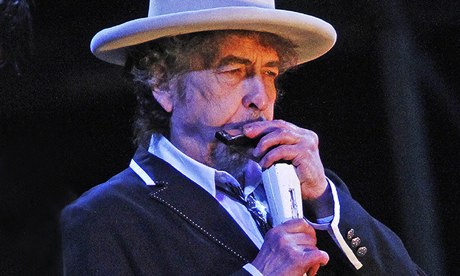
Bob Dylan Under Investigation In France For 'Racist' Remarks
by Nick Hill | 03 December 2013
Bob Dylan is under investigation by the French authorities for allegedly making racial comments in a Rolling Stone interview from 2012.
Iconic American singer/musician Bob Dylan has landed in hot water with the French authorities.
The 72 year-old has been placed under judicial investigation in France for allegedly making racist remarks towards Croatians.
The comments stem from an interview Dylan did with Rolling Stone magazine last year in September 2012, a Croatian community organization claim the 'Blowin in the Wind' singer incited racial hatred.
In the interview Dylan spoke about the racial divide in America, "Blacks know that some whites didn't want to give up slavery", he said. "If they had their way, they would still be under the yoke, and they can't pretend they don't know that."
"If you got a slave master or (Ku Klux) Klan in your blood, blacks can sense that," he continued. "That stuff lingers to this day. Just like Jews can sense Nazi blood and the Serbs can sense Croatian blood."
See 3 very cool pictures from Bob Dylan's show at the Royal Albert Hall.
At the time of been informed about the investigation Bob was in Paris receiving the Legion of Honour, a distinguished French award.
After the interview was published the organisation, CRICCF, which is based in France, claimed the comments violated French racial hatred laws, these complaints automatically triggered a formal investigation.
According to BBC's Hugh Schofield, just because the complaint has been put under investigation does not mean the French authorities will take any further action, however it will be taken very seriously.
Dylan is considered one of the most influential names in the music industry, first finding fame in the 1960s, mainly due to his public support of the US civil rights movement.
Dylan is under investigation for racial comments
-
Blonde on BlondeWrongReported
-
The Times They Are a-Changin'WrongReported
-
The Freewheelin' Bob DylanWrongReported
-
The Basement TapesWrongReported
-
Bringing It All Back HomeWrongReported
-
DesireWrongReported
-
TempestWrongReported
-
Highway 61 RevisitedWrongReported
-
Blood on the TracksWrongReported
-
Slow Train ComingWrongReported
-
Nashville SkylineWrongReported
-
Self PortraitWrongReported
-
Time Out of MindWrongReported
-
New MorningWrongReported
-
The Bootleg Series, Volume 4: Live 1966: The “Royal Albert Hall” ConcertWrongReported
-
Before the FloodWrongReported
-
Modern TimesWrongReported
-
InfidelsWrongReported
-
Pat Garrett & Billy the KidWrongReported
-
Love and TheftWrongReported
-
Bob Dylan's Greatest HitsWrongReported
-
John Wesley HardingWrongReported
-
Street-LegalWrongReported
-
Planet WavesWrongReported
-
The Bootleg Series Vol. 8 – Tell Tale Signs: Rare and Unreleased 1989–2006WrongReported
-
The 50th Anniversary CollectionWrongReported
-
Great White WonderWrongReported
-
Together Through LifeWrongReported
-
Dylan & The Dead
-
Blonde on BlondeWrongReported
-
The Times They Are a-Changin'WrongReported
-
The Freewheelin' Bob DylanWrongReported
-
The Basement TapesWrongReported
-
Bringing It All Back HomeWrongReported
-
DesireWrongReported
-
TempestWrongReported
-
Highway 61 RevisitedWrongReported
-
Blood on the TracksWrongReported
-
Slow Train ComingWrongReported
-
Nashville SkylineWrongReported
-
Self PortraitWrongReported
-
Time Out of MindWrongReported
-
New MorningWrongReported
-
The Bootleg Series, Volume 4: Live 1966: The “Royal Albert Hall” ConcertWrongReported
-
Before the FloodWrongReported
-
Modern TimesWrongReported
-
InfidelsWrongReported
-
Pat Garrett & Billy the KidWrongReported
-
Love and TheftWrongReported
-
Bob Dylan's Greatest HitsWrongReported
-
John Wesley HardingWrongReported
-
Street-LegalWrongReported
-
Planet WavesWrongReported
-
The Bootleg Series Vol. 8 – Tell Tale Signs: Rare and Unreleased 1989–2006WrongReported
-
The 50th Anniversary CollectionWrongReported
-
Great White WonderWrongReported
-
Together Through LifeWrongReported
-
Dylan & The Dead


Bob Dylan performing at St. Lawrence University in upstate New York, 1963

1.Bob Dylan with Allen Ginsbergon the Rolling Thunder Revue, 1975; photo: Elsa Dorfman
2.Bob Dylan in Barcelona
|
||||
| Problems listening to this file? See media help. |
||||
|
|||||
| Problems listening to this file? See media help. | |||||


Dylan at the 1963 March on Washington for Jobs and Freedom

| Birth name | Robert Allen Zimmerman |
|---|---|
| Also known as | Elston Gunn[1] Blind Boy Grunt,Lucky Wilbury/Boo Wilbury, Elmer Johnson, Sergei Petrov, Jack Frost, Jack Fate, Willow Scarlet, Robert Milkwood Thomas |
| Born | May 24, 1941 Duluth, Minnesota, U.S. |
| Genre(s) | Folk rock, rock,Country music,Blues |
| Occupation(s) | Singer-songwriter, author, poet,screenwriter, disc jockey |
| Instrument(s) | Vocals, guitar, harmonica,keyboards, piano, bass |
| Years active | 1959–present |
| Label(s) | Columbia, Asylum |
| Associated acts | The Band, Traveling Wilburys,Grateful Dead, Tom Petty & the Heartbreakers |
| Website | www.bobdylan.com |
Bob Dylan (born Robert Allen Zimmerman on May 24, 1941) is an American singer-songwriter, author, poet andpainter, who has been a major figure in popular music for five decades. Much of Dylan's most celebrated work dates from the 1960s, when he became an informal chronicler and a reluctant figurehead of American unrest. A number of his songs, such as "Blowin' in the Wind" and "The Times They Are a-Changin'", became anthems of both the civil rights movements[2] and of those opposed to the Vietnam War.[3] Dylan's last studio album, Modern Times, was released on August 29, 2006 and entered the U.S. album chart at number one; that year it was named Album of the Year by Rolling Stone magazine.[4] Dylan's new album, Together Through Life, will be released on April 28, 2009.
Dylan's early lyrics incorporated political, social, philosophical, and literary influences, defying existing pop musicconventions and appealing widely to the counterculture. While expanding and personalizing musical styles, he has explored many traditions of American song, from folk, blues and country to gospel, rock and roll and rockabilly to English,Scottish and Irish folk music, and even jazz and swing.[5] Dylan performs with the guitar, piano and harmonica. Backed by a changing line-up of musicians, he has toured steadily since the late 1980s on what has been dubbed the "Never Ending Tour". Although his accomplishments as performer and recording artist have been central to his career, his songwriting is generally regarded as his greatest contribution.[6]
Throughout his career, Dylan has won many awards for his songwriting, performing, and recording. His records have earned Grammy, Golden Globe, and Academy Awards, and he has been inducted into the Rock and Roll Hall of Fame,Nashville Songwriters Hall of Fame and Songwriters Hall of Fame. In 2008, a "Cultural Pathway" was named in Dylan's honor in his birthplace, Duluth.[7][8] In 2008, he was awarded a Pulitzer Prize Special Citation for his "profound impact on popular music and American culture, marked by lyrical compositions of extraordinary poetic power."[9]
Origins and musical beginnings
Robert Allen Zimmerman (Hebrew name Shabtai Zisel ben Avraham)[10][11] was born in St. Mary's Hospital on May 24, 1941, in Duluth, Minnesota,[12] and raised there and in Hibbing, Minnesota, on the Mesabi Iron Range west of Lake Superior. Research by Dylan’s biographers has shown that his paternal grandparents, Zigman and Anna Zimmerman, emigrated from Odessa in the Russian Empire (now Ukraine) to the United States following the antisemitic pogroms of 1905.[13] His mother's grandparents, Benjamin and Lybba Edelstein, were Lithuanian Jews who arrived in America in 1902.[13] In his autobiography Chronicles: Volume One, Dylan writes that his paternal grandmother's maiden name was Kyrgyz and her family originated from Istanbul.[14]
Dylan’s parents, Abram Zimmerman and Beatrice "Beatty" Stone, were part of the area's small but close-knit Jewish community. Robert Zimmerman lived in Duluth until age six, when his father was stricken with polio and the family returned to his mother's home town, Hibbing, where Zimmerman spent the rest of his childhood. Robert Zimmerman spent much of his youth listening to the radio—first to blues and country stations broadcasting from Shreveport, Louisiana and, later, to early rock and roll.[15] He formed several bands in high school: The Shadow Blasters was short lived, but his next, The Golden Chords,[16] lasted longer and played covers of popular songs. Their performance of Danny and the Juniors' "Rock and Roll Is Here to Stay" at their high school talent show was so loud that the principal cut the microphone off.[17] In his 1959 school yearbook, Robert Zimmerman listed as his ambition "To join Little Richard."[18] The same year, using the name Elston Gunnn, he performed two dates with Bobby Vee, playing piano and providing handclaps.[1][19][20]
Zimmerman moved to Minneapolis in September 1959 and enrolled at the University of Minnesota. His early focus on rock and roll gave way to an interest in American folk music. In 1985 Dylan explained the attraction that folk music had exerted on him: "The thing about rock'n'roll is that for me anyway it wasn't enough ... There were great catch-phrases and driving pulse rhythms ... but the songs weren't serious or didn't reflect life in a realistic way. I knew that when I got into folk music, it was more of a serious type of thing. The songs are filled with more despair, more sadness, more triumph, more faith in the supernatural, much deeper feelings."[21] He soon began to perform at the 10 O'clock Scholar, a coffee house a few blocks from campus, and became actively involved in the local Dinkytown folk music circuit.[22][23]
During his Dinkytown days, Zimmerman began introducing himself as "Bob Dylan".[16] In a 2004 interview, Dylan explained: "You're born, you know, the wrong names, wrong parents. I mean, that happens. You call yourself what you want to call yourself. This is the land of the free."[24] In his autobiography, Chronicles: Volume One, Dylan acknowledged that he was familiar with the poetry of Dylan Thomas.[25]
Relocation to New York and record deal
Dylan dropped out of college at the end of his freshman year. In January 1961, he moved to New York City, hoping to perform there and visit his musical idol Woody Guthrie, who was seriously ill with Huntington's Disease in Greystone Park Psychiatric Hospital.[26] Guthrie had been a revelation to Dylan and was the biggest influence on his early performances. Dylan would later say of Guthrie's work, "You could listen to his songs and actually learn how to live."[23] As well as visiting Guthrie in the hospital, Dylan befriended Guthrie's acolyte Ramblin' Jack Elliott. Much of Guthrie's repertoire was actually channeled through Elliott, and Dylan paid tribute to Elliott inChronicles (2004).[27]
From February 1961, Dylan played at various clubs around Greenwich Village. In September, he eventually gained public recognition when Robert Shelton wrote a positive review in The New York Times of a show at Gerde's Folk City.[28] The same month Dylan played harmonica on folk singer Carolyn Hester's eponymous third album, which brought his talents to the attention of the album's producer John Hammond.[29] Hammond signed Dylan to Columbia Records in October. The performances on his first Columbia album, Bob Dylan (1962), consisted of familiar folk, blues and gospel material combined with two original compositions. The album made little impact, selling only 5,000 copies in its first year, just enough to break even.[30] Within Columbia Records, some referred to the singer as "Hammond's Folly" and suggested dropping his contract. Hammond defended Dylan vigorously, and Johnny Cash was also a powerful ally of Dylan.[30] While working for Columbia, Dylan also recorded several songs under the pseudonym Blind Boy Grunt, for Broadside Magazine, a folk music magazine and record label.[31]
Dylan made two important career moves in August 1962. He legally changed his name to Robert Dylan, and signed a management contract with Albert Grossman. Grossman remained Dylan's manager until 1970, and was notable both for his sometimes confrontational personality, and for the fiercely protective loyalty he displayed towards his principal client.[32] Dylan would subsequently describe Grossman thus: "He was kind of like a Colonel Tom Parker figure ... you could smell him coming."[23]Tensions between Grossman and John Hammond led to Hammond being replaced as the producer of Dylan's second album by the young African American jazz producer Tom Wilson.[33]
By the time Dylan's second album, The Freewheelin' Bob Dylan, was released in May 1963, he had begun to make his name as both a singer and a songwriter. Many of the songs on this album were labelled protest songs, inspired partly by Guthrie and influenced byPete Seeger's passion for topical songs.[34] "Oxford Town", for example, was a sardonic account of James Meredith's ordeal as the first black student to risk enrollment at the University of Mississippi.[35]
His most famous song of the time, "Blowin' in the Wind", partially derived its melody from the traditional slave song "No More Auction Block", while its lyrics questioned the social and political status quo.[36] The song was widely recorded and became an international hit for Peter, Paul and Mary, setting a precedent for many other artists who would have hits with Dylan's songs. "A Hard Rain's a-Gonna Fall" was based on the tune of the folk ballad "Lord Randall". With its veiled references to nuclear apocalypse, it gained even more resonance when the Cuban missile crisis developed only a few weeks after Dylan began performing it.[37]Like "Blowin' in the Wind", "A Hard Rain's a-Gonna Fall" marked an important new direction in modern song writing, blending a stream-of-consciousness, imagist lyrical attack with a traditional folk form.[38]
While Dylan's topical songs solidified his early reputation, Freewheelin' also included a mixture of love songs and jokey, surreal talking blues. Humor was a large part of Dylan's persona,
"We just played it, just wore it out. The content of the song lyrics and just the attitude—it was incredibly original and wonderful."[41]
The rough edge of Dylan's singing was unsettling to some early listeners but an attraction to others. Describing the impact that Dylan had on she and her husband, Joyce Carol Oates wrote: "When we first heard this raw, very young, and seemingly untrained voice, frankly nasal, as if sandpaper could sing, the effect was dramatic and electrifying."[42]Many of his most famous early songs first reached the public through more immediately palatable versions by other performers, such as Joan Baez, who became Dylan's advocate, as well as his lover.[16] Baez was influential in bringing Dylan to national and international prominence by recording several of his early songs and inviting him onstage during her own concerts.[43]
Others who recorded and had hits with Dylan's songs in the early and mid-1960s included The Byrds, Sonny and Cher, The Hollies, Peter, Paul and Mary, Manfred Mann, and The Turtles. Most attempted to impart a pop feel and rhythm to the songs, while Dylan and Baez performed them mostly as sparse folk pieces. The cover versions became so ubiquitous that CBS started to promote him with the tag "Nobody Sings Dylan Like Dylan."[44]
"Mixed Up Confusion", recorded during the Freewheelin' sessions with a backing band, was released as a single and then quickly withdrawn. In contrast to the mostly solo acoustic performances on the album, the single showed a willingness to experiment with a rockabilly sound. Cameron Crowe described it as "a fascinating look at a folk artist with his mind wandering towards Elvis Presley and Sun Records."[45]
Protest and Another Side
In May 1963, Dylan's political profile was raised when he walked out of The Ed Sullivan Show. During rehearsals, Dylan had been informed by CBS Television's "head of program practices" that the song he was planning to perform, "Talkin' John Birch Society Blues", was potentially libelous to the John Birch Society. Rather than comply with the censorship, Dylan refused to appear on the program.[46]
By this time, Dylan and Baez were both prominent in the civil rights movement, singing together at the March on Washington on August 28, 1963.[47] Dylan's third album, The Times They Are a-Changin', reflected a more politicized and cynical Dylan.[48] The songs often took as their subject matter contemporary, real life stories, with "Only A Pawn In Their Game" addressing the murder of civil rights worker Medgar Evers; and the Brechtian "The Lonesome Death of Hattie Carroll" the death of black hotel barmaid Hattie Carroll, at the hands of young white socialite William Zantzinger.[49] On a more general theme, "Ballad of Hollis Brown" and "North Country Blues" address the despair engendered by the breakdown of farming and mining communities. This political material was accompanied by two personal love songs, "Boots of Spanish Leather" and "One Too Many Mornings".[50]
By the end of 1963, Dylan felt both manipulated and constrained by the folk and protest movements.[51] These tensions were publicly displayed when, accepting the "Tom Paine Award" from the National Emergency Civil Liberties Committeeshortly after the assassination of John F. Kennedy, a drunken, rambling Dylan questioned the role of the committee, insulted its members as old and balding, and claimed to see something of himself (and of every man) in Kennedy's alleged assassin, Lee Harvey Oswald.[52]
Another Side of Bob Dylan, recorded on a single June evening in 1964,[16] had a lighter mood than its predecessor. The surreal, humorous Dylan reemerged on "I Shall Be Free #10" and "Motorpsycho Nightmare". "Spanish Harlem Incident" and "To Ramona" are romantic and passionate love songs, while "Black Crow Blues" and "I Don't Believe You (She Acts Like We Never Have Met)" suggest the rock and roll soon to dominate Dylan's music. "It Ain't Me Babe", on the surface a song about spurned love, has been described as a rejection of the role his reputation had thrust at him.[53] His newest direction was signaled by two lengthy songs: theimpressionistic "Chimes of Freedom", which sets elements of social commentary against a denser metaphorical landscape in a style later characterized by Allen Ginsberg as "chains of flashing images,"[54] and "My Back Pages", which attacks the simplistic and arch seriousness of his own earlier topical songs and seems to predict the backlash he was about to encounter from his former champions as he took a new direction.[55]
In the latter half of 1964 and 1965, Dylan’s appearance and musical style changed rapidly, as he made his move from leading contemporary songwriter of the folk scene to Folk-Rock pop-music star. His scruffy jeans and work shirts were replaced by aCarnaby Street wardrobe, sunglasses day or night, and pointy "Beatle boots". A London reporter wrote: "Hair that would set the teeth of a comb on edge. A loud shirt that would dim the neon lights of Leicester Square. He looks like an undernourished cockatoo."[56] Dylan also began to spar in increasingly surreal ways with his interviewers. Appearing on the Les Crane TV show and asked about a movie he was planning to make, he told Crane it would be a cowboy horror movie. Asked if he played the cowboy, Dylan replied, "No, I play my mother."[57]
His March 1965 album Bringing It All Back Home was yet another stylistic leap.[58] The album featured his first recordings made with electric instruments. The first single, "Subterranean Homesick Blues", owed much to Chuck Berry's "Too Much Monkey Business" and was provided with an early music video courtesy of D. A. Pennebaker's cinéma vérité presentation of Dylan's 1965 tour of England, Dont Look Back.[59] Its free association lyrics both harked back to the manic energy of Beat poetry and were a forerunner of rap and hip-hop.[60]
By contrast, the B side of the album was interpreted by some folk fans as a conciliatory gesture: four long songs where Dylan accompanied himself on acoustic guitar and harmonica.[61] "Mr. Tambourine Man" had already been a hit for The Byrds, and would become one of his best known songs; while "It's All Over Now Baby Blue" and "It's Alright Ma (I'm Only Bleeding)" would be acclaimed as two of Dylan's most important compositions.[61][62]
In the summer of 1965, as the headliner at the Newport Folk Festival, Dylan performed his first electric set since his high school days with a pickup group drawn mostly from the Paul Butterfield Blues Band, featuring Mike Bloomfield (guitar), Sam Lay (drums) and Jerome Arnold (bass), plus Al Kooper (organ) and Barry Goldberg(piano).[63] Dylan had appeared at Newport in 1963 and 1964, but in 1965 Dylan, met with a mix of cheering and booing, left the stage after only three songs. As one version of the legend has it, the boos were from the outraged folk fans whom Dylan had alienated by appearing, unexpectedly, with an electric guitar. An alternative account claims audience members were merely upset by poor sound quality and a surprisingly short set.[64]
Dylan's 1965 Newport performance provoked an outraged response from the folk music establishment.[65] Ewan MacColl wrote in Sing Out!, "Our traditional songs and ballads are the creations of extraordinarily talented artists working inside traditions formulated over time ... But what of Bobby Dylan? ... a youth of mediocre talent. Only a non-critical audience, nourished on the watery pap of pop music could have fallen for such tenth-rate drivel."[66] On July 29, just four days after his controversial performance at Newport, Dylan was back in the studio in New York, recording "Positively 4th Street". The lyrics teemed with images of vengeance and paranoia,[67] and it was widely interpreted as Dylan's put-down of former friends from the folk community—friends he had known in the clubs along West 4th Street.[68]


TONIGHT: BOB DYLAN AT THE RIVER
Bob Dylan in the early days

With Joan Baez during the Civil Rights March in Washington, D.C., August 28, 1963
Just in case you’ve missed it: some feller named Bob Dylan is going to be playing down at Riverfest Amphitheatre tonight. Maybe you heard of him?
We all know Bob’s music, but if you decipher the mumble he’s actually pretty dadgum funny. Here’s a bunch of Bob’s jokes from his XM radio show (thanks to the folks at
DemocraticUnderground.com for the list. )
”I got a friend who’s learning to become a ballerina. She’s improving by leaps and bounds.”
“Getting married’s a lot like getting into a tub of hot water. After you get used to it, it ain’t so hot.” “I once had a cross-eyed teacher who couldn’t control his pupils.” “You know, I sleep at the edge of the bed. It doesn’t take long for me to drop off.” “Two dogs talking. One says to the other: `You’re crazy. You ought to go see a psychiatrist.’ The other dog says: `I’d love to, but I’m not allowed on the couch.”‘ “I was having dinner with our announcer, Pierre Mancini. The only difference between Pierre Mancini and a canoe is that sometimes a canoe will tip.” “Take our engineer, Tex Carbone. He’s so laid back it takes him two hours to watch `60 Minutes.’ I’m the complete opposite. I can make Minute Rice in 30 seconds.” “I just came back from a pleasure trip. Took my mother-in-law to the airport.” “What do you do if you miss your mother-in-law? Reload, and try again.” “All musicians get girls, but a guitarist always has his pick.” “What’s the difference between a drummer and a savings bond? Eventually, a savings bond will mature and earn money.” “They got a new `dial-a-prayer’ for atheists. You call it, and nobody answers.” “A lot of people don’t celebrate Christmas. Like my buddy Dexter Quinn. He’s an atheist. You know what his favorite Christmas movie is? `Coincidence on 34th Street.”‘ “If diamonds are a girl’s best friend, why do so many girls get mad when you want to go to the ballpark? You tell me.” “I gave a bald-headed friend of mine a comb. You know what he said to me? `I’ll never part with it.”‘ “My friend’s wife is a really bad cook. I broke a tooth on her coffee.” “I was at a restaurant. I said to the waiter, `There’s a needle in my soup.’ He said, `I’m very sorry. It’s a typographical error. It’s supposed to be a noodle.”‘ “A cat has nine lives, but a bullfrog croaks every day.” “If you think the sun is too hot, just remember, you don’t have to shovel it.” “In Sweden, they have a system of higher taxes, but welfare for everyone. They call it the Swedish model. Well, I could go for a Swedish model right about now.” “Here’s a tip on how you can save your money. Use somebody else’s.” “He opened a restaurant on the moon. It had great food, people say, but no atmosphere.” “My friend was happily married for 10 years. Too bad he was married for 30.” “Every day in the United States, 200 new jail cells are constructed. I hope we can keep up!” “A giraffe can go a long time without water. But he wants to see a menu right away.” “I was having dinner the other day when the waiter came over. I said to him, `There’s a fly in my soup.’ And he said, `That’s very possible. The cook used to be a tailor.”‘ “Married men don’t live longer. It just seems longer.”
Too Dark Too See? ‘Time Out Of Mind’ and Bob Dylan’s Late Trilogy
thestoryandthetruth.worldpress.com
Over at the Colour blog last month, Matt was ruminating about Blood On The Tracks, Bob Dylan’s 1975 masterpiece of relationship breakdown and betrayal. He was thinking of it as a great winter album, and this is undoubtedly true - it is frosty and bitter, brilliantly monochrome. But Dylan out-wintered himself on 1997’s Time Out Of Mind, which appropriately enough was the first entry in his great late trilogy. In a New York Times interview to mark the album’s release, Dylan said that, “A lot of the songs were written after the sun went down.” Time Out Of Mind is very much an album of the dark, dealing with death but more broadly with the diminution of power, the dimming of the light. Dylan had once boasted, on 1988’s Silvio, that, “I can tell you fancy, I can tell you plain”; in the 1963 song When The Ship Comes In, he shouts from the bow that his enemies’ days are numbered, and they are drowned in the tide (like Phaoroah’s tribe) by the sheer force of his rhetoric.
Yet Time Out Of Mind inaugurated a new Dylan, one less certain of his own powers, and indeed of the possibility of transformation in general. This lack of faith in the new is principally evidenced through the extensive use of quotation across the late trilogy, culminating in 2006’s Modern Times, in which whole tracts of old and forgotten songs are resurrected to address the new age (though controversially the CD declares “all songs written by Bob Dylan”). The middle - and pivotal - work in the trilogy, “Love and Theft”‘, puts this process front and centre in its very title (it is the only album in the canon to benefit from quotation marks).
On that album’s Mississippi, Dylan sings, ‘All my powers of expression, and thoughts so sublime, could never do you justice, in reason or rhyme.’ Indeed, at times the new Dylan falls back on cliché to express the inexpressible: Spirit on the Water, fromModern Times, is a seven minute epic of aphorism, piling old saw upon old saw until their cumulative weight adds up to something like the truth cliché once represented (”from East to West, ever since the world began”); Dylan “can’t believe these things would ever fade from your mind.” But this is hardly the figure of the 1960s, or even the 1970s, he of brash overconfidence and iconoclastic verve. This is another Dylan, looking for truth with the help of others; there’s a new humility in him.
The reasons for this - or the crises which led to it - are explored on Time Out Of Mind, and this bleak honesty is what makes it so thoroughly a winter album - it not just evokes coldness, but has let it sink into its bones. During its centrepiece, the 16-minute ramble across the peaks of Dylan’s psyche which is the song Highlands, the singer notices young couples relaxing in a park: “Well, I’d trade places with any of them / In a minute, if I could,” he confides, admitting to the disappointment, the limitations, of old age. And on Not Dark Yet, one of Dylan’s very bleakest songs, we hear that “my sense of humanity has gone down the drain.” Dylan’s alienation is total, and he is left tryin’ to get to heaven before they close the door.
Michael Gray, in his superlative and idiosyncratic ‘Bob Dylan Encyclopedia’, argues that all this darkness, this angsty confessional, isn’t really the stuff of Dylan: that, in its use of the folk idiom and country blues, “Love and Theft”, the album which followed it in 2001, is the more important, the more Dylanesque, record. This is persuasive, and certainly Time Out Of Mind marks something of a break with Dylans past and future. But in its sense of alienation, it develops a new relationship with time. Dylan is no longer at its forward edge. As Eyolf Østrem has beautifully put it,Highlands (and, I’d argue, the album as a whole) “succeeds, not by trying to stop [time] in the tracks or hold it back, but by realizing that time goes on regardless of everything, and by tapping into its flow and disregarding it, instead of fighting it.”Contra Gray, Time Out Mind (and now we see that title as a typically Dylanesque pun) paves the way for the playful orneriness of “Love and Theft”: Dylan is only able to start fully inhabiting this old man persona because, in 1997, he put his hands up and surrendered on the path to decrepitude. This persistence of vision is evidenced by Make You Feel My Love, a minor song fromTime Out of Mind which nevertheless performs exactly the same trick as a song separated from it by more than a decade, Spirit on the Water. As I’ve suggested, that song uses the power of cliché, of the cumulative power of our stock phrases. Consider the first two verses of Make You Feel My Love: When the rain Is blowing in your face And the whole world Is on your case The rain falls, the whole world’s against you, it’s dark outside and there are tears on your face. But it’s OK, because Bob loves you. This is surely a first stab at raiding the wordhoard: here Dylan reclaims our most basic idioms, in an admission that we can learn from the past rather than constantly overturn it - and in doing so as he explicity admits to his diminishing powers.
It is important to note, though, how Dylan’s delivery serves this purpose. A banality spoken blandly will merely bore - invention is the stuff of profundity. In times past electrifying images poured out of Dylan at a rate he called ‘vomitific’. The guilty undertaker sighed, the lonesome organ grinder cried; the silver saxophones urged refusal. The new Dylan, back in time to a self that existed before Blonde on Blonde(he was so much older then, and so much younger now), is interested more in recontextualising older images, more venerable words. It is the way he sings them which invests them with something beyond their everyday familiarity. Christopher Ricks has called it Dylan’s “exquisite precision of voice,” and this is a good way of thinking about the ways in which Dylan chooses to sing a line: what he is looking for is the means in melody and rhythm better to communicate what he has written. This duality is the source of his late songs’ substance: his voice is shot, perhaps, but its subtelty is greater than ever. (We might compare Dylan’s vocal performance on Make You Feel My Love with that of teen soulster Adele’s on her debut album ‘19'; creamy and technically accomplished, it fails somhow to find this space in the inherited phrase which lies apart from the platitude.) “My cruel weapons have been put on the shelf,” Dylan sings on Workingman’s Blues #2, the most important song from Modern Times. But this isn’t the whole story, we know, since Dylan’s late period is actually a veritable treasure trove of wisdom and comment: far from hanging up the burden of his pen, Dylan has merely employed it in new ways. And on “Love and Theft”, we get closer to the truth: “Summer days, summer nights are gone - I know a place where there’s still somethin’ going on.” IfTime Out of Mind was the start of Bob Dylan’s winter, he soon found a new way to keep warm. Modern Times (2006) "Love and Theft" (2001)
Time Out Of Mind (1997)
I could offer you A warm embrace To make you feel my love, When the evening shadows
And the stars appear And there is no one there To dry your tears I could hold you
For a million yearsTo make you feel my love
In July 1965, Dylan released the single "Like a Rolling Stone", which peaked at #2 in the U.S. and at #4 in the UK charts. At over six minutes in length, the song has been widely credited with altering attitudes about what a pop single could convey. Bruce Springsteen said that on first hearing the single, "that snare shot sounded like somebody'd kicked open the door to your mind".[70] In 2004, Rolling Stone magazine listed it at number one on its list of "The RS 500 Greatest Songs of All Time".[69] The song also opened Dylan's next album, Highway 61 Revisited, titled after the road that led from Dylan's native Minnesota to the musical hotbed of New Orleans.[71] The songs were in the same vein as the hit single, flavored by Mike Bloomfield's blues guitar, a rhythm section, and emphasis on Al Kooper's organ riffs. "Desolation Row" offers the sole exception, as Dylan surreally references many figures of Western culture over the course of its eleven and a half minutes.[72]
In support of the record, Dylan was booked for two U.S. concerts and set about assembling a band. Mike Bloomfield was unwilling to leave the Butterfield Band, so Dylan mixed Al Kooper and Harvey Brooks from his studio crew with bar-band stalwarts Robbie Robertson and Levon Helm, best known at the time for being part of Ronnie Hawkins's backing band The Hawks.[73] On August 28 at Forest Hills Tennis Stadium, the group was heckled by an audience still annoyed by Dylan's electric sound. The band's reception on September 3 at the Hollywood Bowl was more favorable.[74]
While Dylan and the Hawks met increasingly receptive audiences on tour, their studio efforts floundered. Producer Bob Johnston persuaded Dylan to record in Nashvillein February 1966, and surrounded him with a cadre of top-notch session men. At Dylan's insistence, Robertson and Kooper came down from New York City to play on the sessions.[75] The Nashville sessions produced the double-album Blonde on Blonde (1966), featuring what Dylan later called "that thin wild mercury sound".[76] Al Kooper described the album as "taking two cultures and smashing them together with a huge explosion": the musical world of Nashville and the world of the "quintessential New York hipster" Bob Dylan.[77]On November 22, 1965, Dylan secretly married 25-year-old former model Sara Lownds.[16][78] Some of Dylan’s friends (including Ramblin' Jack Elliott) claim that, in conversation immediately after the event, Dylan denied that he was married.[78] Journalist Nora Ephron first made the news public in the New York Post in February 1966 with the headline “Hush! Bob Dylan is wed.”[79]Dylan undertook a world tour of Australia and Europe in the spring of 1966. Each show was split into two parts. Dylan performed solo during the first half, accompanying himself on acoustic guitar and harmonica. In the second half, backed by the Hawks, he played high voltage electric music. This contrast provoked many fans, who jeered and slow handclapped.[80] The tour culminated in a famously raucous confrontation between Dylan and his audience at the Manchester Free Trade Hall in England.[81] At the climax of the concert, one fan, angry with Dylan's electric sound, shouted: "Judas!" to which Dylan responded, "I don't believe you ... You're a liar!" He then turned to the band and, just within earshot of the microphone, said "Play it fucking loud."[82] They then launched into the last song of the night with gusto—"Like a Rolling Stone".
Motorcycle accident and reclusion After his European tour, Dylan returned to New York, but the pressures on him continued to increase. ABC Television had paid an advance for a TV show they could screen.[83] His publisher, Macmillan, was demanding a finished manuscript of the poem/novel Tarantula. Manager Albert Grossman had already scheduled an extensive concert tour for that summer and fall. On July 29, 1966, the brakes on Dylan's Triumph 500 motorcycle locked on a road near his home in Woodstock, New York, throwing him to the ground. Though the extent of his injuries were never fully disclosed, Dylan said that he broke several vertebrae in his neck.[84] Mystery still surrounds the circumstances of the accident[85]since no ambulance was called to the scene and Dylan was not hospitalized.[84] Commenting on the significance of the crash, Dylan expressed some bitterness at the way he had been treated: "When I had that motorcycle accident ... I woke up and caught my senses, I realized that I was just workin' for all these leeches. And I didn't want to do that. Plus, I had a family and I just wanted to see my kids."[86] Howard Sounes' Dylan biography, Down The Highway, concludes that the crash offered Dylan the much-needed chance to escape from the pressures that had built up around him.[84] In the wake of his accident, Dylan withdrew from the public and, apart from a few select appearances, did not tour again for eight years.[85]Once Dylan was well enough to resume creative work, he began editing film footage of his 1966 tour for Eat the Document, a rarely exhibited follow-up to Dont Look Back. A rough-cut was shown to ABC Television and was promptly rejected as incomprehensible to a mainstream audience.[87] In 1967 he began recording music with the Hawks at his home and in the basement of the Hawks' nearby house, called "Big Pink".[88] These songs, initially compiled as demos for other artists to record, provided hit singles for Julie Driscoll ("This Wheel's on Fire"), The Byrds ("You Ain't Goin' Nowhere", "Nothing Was Delivered"), and Manfred Mann ("Quinn the Eskimo (The Mighty Quinn)"). Columbia belatedly released selections from them in 1975 as The Basement Tapes. Over the years, more and more of the songs recorded by Dylan and his band in 1967 appeared on various bootleg recordings, culminating in a five-CD bootleg set titled The Genuine Basement Tapes, containing 107 songs and alternate takes.[89] In the coming months, the Hawks recorded the album Music from Big Pink using songs they first worked on in their basement in Woodstock, and renamed themselves The Band,[90] thus beginning a long and successful recording and performing career of their own.
In October and November 1967, Dylan returned to Nashville.[91] Back in the recording studio after a 19-month break, he was accompanied only by Charlie McCoy on bass,[92] Kenny Buttrey on drums,[93] and Pete Drake on steel guitar.[94] The result was John Wesley Harding, a quiet, contemplative record of shorter songs, set in a landscape that drew on both the American West and the Bible. The sparse structure and instrumentation, coupled with lyrics that took the Judeo-Christian tradition seriously, marked a departure not only from Dylan's own work but from the escalating psychedelic fervor of the 1960s musical culture.[95] It included "All Along the Watchtower", with lyrics derived from the Book of Isaiah (21:5–9). The song was later recorded by Jimi Hendrix, whose version Dylan himself would later acknowledge as definitive.[21]Woody Guthrie died on October 3, 1967, and Dylan made his first live appearance in twenty months at a Guthrie memorial concert held at Carnegie Hall on January 20, 1968.[96] Dylan's next release, Nashville Skyline (1969), was virtually a mainstream country record featuring instrumental backing by Nashville musicians, a mellow-voiced Dylan, a duet with Johnny Cash, and the hit single "Lay Lady Lay", which had been originally written for the Midnight Cowboy soundtrack, but was not submitted in time to make the final cut.[98] In May 1969, Dylan appeared on the first episode of Johnny Cash's new television show, duetting with Cash on "Girl from the North Country", "It Ain't Me Babe" and "Living the Blues". Dylan next travelled to England to top the bill at the Isle of Wight rock festival on August 31, 1969, after rejecting overtures to appear at the Woodstock Festival far closer to his home.[99]
1970s: Shelter From The Storm In the early 1970s critics charged Dylan's output was of varied and unpredictable quality. Rolling Stone magazine writer and Dylan loyalist Greil Marcus notoriously asked "What is this shit?" upon first listening to 1970's Self Portrait.[100][101] In general, Self Portrait, a double LP including few original songs, was poorly received.[16] Later that year, Dylan released New Morning, which some considered a return to form. In the same year Dylan co-wrote "I'd Have You Anytime", "Nowhere to Go" (also known as "When Everybody Comes to Town"), and "If Not For You" with George Harrison. "I'd Have You Anytime" and "If Not For You" appeared on the ex-Beatle's triple albumAll Things Must Pass. Harrison and Dylan recorded "If Not For You" together for Harrison's 1970 masterpiece All Things Must Pass with Dylan on harmonica. Future Yes drummer Alan White stated that John Lennon also played on "If Not For You" on the recording for All Things Must Pass. Dylan's surprise appearance at Harrison's 1971Concert for Bangladesh attracted much media coverage, reflecting that Dylan's live appearances had become rare.[102] Between March 16 and 19, 1971, Dylan reserved three days at Blue Rock Studios, a small studio in New York's Greenwich Village. These sessions resulted in one single, "Watching The River Flow", and a new recording of "When I Paint My Masterpiece". [50] On November 4, 1971 Dylan recorded "George Jackson" which he released a week later.[50] For many, the single was a surprising return to protest material, mourning the killing of Black Panther George Jackson in San Quentin Prisonthat summer.[103] In 1972 Dylan signed onto Sam Peckinpah's film Pat Garrett and Billy the Kid, providing songs and backing music for the movie, and playing the role of "Alias", a member of Billy's gang who had some basis in history.[104] Despite the film's failure at the box office, the song "Knockin' on Heaven's Door" has proven its durability as one of Dylan's most extensively covered songs. [105][106]
Dylan began 1973 by signing with a new record label, David Geffen's Asylum Records, when his contract with Columbia Recordsexpired. On his next album, Planet Waves, he used The Band as backing group, while rehearsing for a major tour. The album included two versions of "Forever Young", which became one of his most popular songs.[107] Christopher Ricks has connected the chorus of this song with John Keats's "Ode on a Grecian Urn", which contains the line "For ever panting, and for ever young."[108] As one critic described it, the song projected "something hymnal and heartfelt that spoke of the father in Dylan",[109] and Dylan himself commented: "I wrote it thinking about one of my boys and not wanting to be too sentimental."[110] Biographer Howard Sounes noted that Jakob Dylan believed the song was about him.[107] Columbia Records simultaneously released Dylan, a haphazard collection of studio outtakes (almost exclusively cover songs), which was widely interpreted as a churlish response to Dylan's signing with a rival record label.[111] In January 1974 Dylan and The Bandembarked on their high-profile, coast-to-coast North American tour. A live double album of the tour, Before the Flood, was released on Asylum Records. After the tour, Dylan and his wife became publicly estranged. He filled a small red notebook with songs about relationships and ruptures, and quickly recorded a new album entitled Blood on the Tracks in September 1974.[112]Dylan delayed the album's release, however, and re-recorded half of the songs at Sound 80 Studios in Minneapolis with production assistance from his brother David Zimmerman.[113] During this time, Dylan returned to Columbia Records which eventually reissued his Asylum albums. Released in early 1975, Blood on the Tracks received mixed reviews. In the NME, Nick Kent described "the accompaniments [as] often so trashy they sound like mere practise takes."[114] In Rolling Stone, reviewer Jon Landauwrote that "the record has been made with typical shoddiness."[115] However, over the years critics have come to see it as one of Dylan's greatest achievements, perhaps the only serious rival to his mid-60s trilogy of albums. In Salon.com, Bill Wyman wrote: "Blood on the Tracks is his only flawless album and his best produced; the songs, each of them, are constructed in disciplined fashion. It is his kindest album and most dismayed, and seems in hindsight to have achieved a sublime balance between the logorrhea-plagued excesses of his mid-'60s output and the self-consciously simple compositions of his post-accident years."[116] NovelistRick Moody called it "the truest, most honest account of a love affair from tip to stern ever put down on magnetic tape."[117] After the tour, Dylan and his wife became publicly estranged. He filled a small red notebook with songs about relationships and ruptures, and quickly recorded a new album entitled Blood on the Tracks in September 1974.[112]Dylan delayed the album's release, however, and re-recorded half of the songs at Sound 80 Studios in Minneapolis with production assistance from his brother David Zimmerman.[113] During this time, Dylan returned to Columbia Records which eventually reissued his Asylum albums. Released in early 1975, Blood on the Tracks received mixed reviews. In the NME, Nick Kent described "the accompaniments [as] often so trashy they sound like mere practise takes."[114] In Rolling Stone, reviewer Jon Landauwrote that "the record has been made with typical shoddiness."[115] However, over the years critics have come to see it as one of Dylan's greatest achievements, perhaps the only serious rival to his mid-60s trilogy of albums. In Salon.com, Bill Wyman wrote: "Blood on the Tracks is his only flawless album and his best produced; the songs, each of them, are constructed in disciplined fashion. It is his kindest album and most dismayed, and seems in hindsight to have achieved a sublime balance between the logorrhea-plagued excesses of his mid-'60s output and the self-consciously simple compositions of his post-accident years."[116] NovelistRick Moody called it "the truest, most honest account of a love affair from tip to stern ever put down on magnetic tape."[117] That summer Dylan wrote his first successful "protest" song in twelve years, championing the cause of boxer Rubin "Hurricane" Carter, who had been imprisoned for a triple murder in Paterson, New Jersey. After visiting Carter in jail, Dylan wrote "Hurricane", presenting the case for Carter's innocence. Despite its 8:32 minute length, the song was released as a single, peaking at #33 on the U.S. Billboard Chart, and performed at every 1975 date of Dylan's next tour, the Rolling Thunder Revue.[118] The tour was a varied evening of entertainment featuring many performers drawn from the resurgent Greenwich Village folk scene, including T-Bone Burnett,Ramblin' Jack Elliott, David Mansfield, Roger McGuinn, Mick Ronson, Joan Baez, and violinist Scarlet Rivera, whom Dylan discovered while she was walking down the street, her violin case hanging on her back.[119] Allen Ginsberg accompanied the troupe, staging scenes for the film Dylan was simultaneously shooting. Sam Shepard was initially hired to write the film's screenplay, but ended up accompanying the tour as informal chronicler.[120] Running through late 1975 and again through early 1976, the tour encompassed the release of the album Desire, with many of Dylan's new songs featuring an almost travelogue-like narrative style, showing the influence of his new collaborator, playwrightJacques Levy.[121][122] The spring 1976 half of the tour was documented by a TV concert special, Hard Rain, and the LP Hard Rain; no concert album from the better-received and better-known opening half of the tour was released until 2002's Live 1975.[123] The fall 1975 tour with the Revue also provided the backdrop to Dylan's nearly four-hour film Renaldo and Clara, a sprawling and improvised narrative, mixed with concert footage and reminiscences. Released in 1978, the movie received generally poor, sometimes scathing, reviews and had a very brief theatrical run.[124][125] Later in that year, Dylan allowed a two-hour edit, dominated by the concert performances, to be more widely released.[126] In November 1976 Dylan appeared at The Band's "farewell" concert, along with other guests including Joni Mitchell, Muddy Waters, Van Morrison and Neil Young. Martin Scorsese's acclaimed cinematic chronicle of this show, The Last Waltz, was released in 1978 and included about half of Dylan's set.[127] In 1976, Dylan also wrote and duetted on the song "Sign Language" for Eric Clapton's No Reason To Cry[128]. Dylan's 1978 album Street-Legal, recorded with a large, pop-rock band, complete with female backing vocalists, was lyrically one of his more complex and cohesive.[129]It suffered, however, from a poor sound mix (attributed to his studio recording practices),[130] submerging much of its instrumentation until its remastered CD release nearly a quarter century later.
|
||||
| Problems listening to this file? See media help. | ||||
 |
|
||||
| Problems listening to this file? See media help. | |||||

|
|
|
||||
| Problems listening to this file? See media help. | |||||
1990s: Not Dark Yet
Dylan's 1990s began with Under the Red Sky (1990), an about-face from the serious Oh Mercy. The album contained several apparently simple songs, including "Under the Red Sky" and "Wiggle Wiggle". The album was dedicated to "Gabby Goo Goo"; this was later explained as a nickname for the daughter of Dylan and Carolyn Dennis, Desiree Gabrielle Dennis-Dylan, who was four at that time.[162] Sidemen on the album included George Harrison, Slash from Guns N' Roses, David Crosby,Bruce Hornsby, Stevie Ray Vaughan, and Elton John. Despite the stellar line-up, the record received bad reviews and sold poorly. Dylan did not make another studio album of new songs for seven years.[163]
In 1991, Dylan was honored by the recording industry with a Grammy Lifetime Achievement Award.[164] The event coincided with the start of the Gulf War againstSaddam Hussein, and Dylan performed his song "Masters of War".[165] Dylan then made a short speech which startled some of the audience. [165]
The next few years saw Dylan returning to his roots with two albums covering old folk and blues numbers: Good as I Been to You (1992) and World Gone Wrong (1993), featuring interpretations and acoustic guitar work. Many critics and fans commented on the quiet beauty of the song "Lone Pilgrim",[166] penned by a 19th century teacher and sung by Dylan with a haunting reverence. An exception to this rootsy mood came in Dylan's 1991 songwriting collaboration with Michael Bolton; the resulting song "Steel Bars", was released on Bolton's album Time, Love & Tenderness. In November 1994 Dylan recorded two live shows for MTV Unplugged. He claimed his wish to perform a set of traditional songs for the show was overruled by Sony executives who insisted on a greatest hits package.[167] The album produced from it, MTV Unplugged, included "John Brown", an unreleased 1963 song detailing the ravages of both war and jingoism.
With a collection of songs reportedly written while snowed-in on his Minnesota ranch,[168] Dylan booked recording time with Daniel Lanois at Miami's Criteria Studios in January 1997. The subsequent recording sessions were, by some accounts, fraught with musical tension.[169] Late that spring, before the album's release, Dylan was hospitalized with a life-threatening heart infection,pericarditis, brought on by histoplasmosis. His scheduled European tour was cancelled, but Dylan made a speedy recovery and left the hospital saying, "I really thought I'd be seeing Elvis soon."[170] He was back on the road by midsummer, and in early fall performed before Pope John Paul II at the World Eucharistic Conference in Bologna, Italy. The Pope treated the audience of 200,000 people to a sermon based on Dylan's lyric "Blowin' in the Wind".[171]
September saw the release of the new Lanois-produced album, Time Out of Mind. With its bitter assessment of love and morbid ruminations, Dylan's first collection of original songs in seven years was highly acclaimed. Rolling Stone said "Mortality bears down hard, while shots of gallows humor ring out."[172] This collection of complex songs won him his first solo "Album of the Year" Grammy Award (he was one of numerous performers on The Concert for Bangladesh, the 1972 winner). The love song "Make You Feel My Love" became a number one country hit for Garth Brooks.[16]
In December 1997 U.S. President Bill Clinton presented Dylan with a Kennedy Center Honor in the East Room of the White House, paying this tribute: "He probably had more impact on people of my generation than any other creative artist. His voice and lyrics haven't always been easy on the ear, but throughout his career Bob Dylan has never aimed to please. He's disturbed the peace and discomforted the powerful."[173]
Born-again period
In the late 1970s, Dylan became a born-again Christian[131][132][133] and released two albums of Christian gospel music.Slow Train Coming (1979) featured the guitar accompaniment of Mark Knopfler (of Dire Straits) and was produced by veteran R&B producer, Jerry Wexler. Wexler recalled that when Dylan had started to evangelize to him during the recording, he replied: "Bob, you're dealing with a sixty-two-year old Jewish atheist. Let's just make an album."[134] The album won Dylan a Grammy Award as "Best Male Vocalist" for the song "Gotta Serve Somebody". The second evangelical album, Saved (1980), received mixed reviews, although Kurt Loder in Rolling Stone declared the album was far superior, musically, to its predecessor.[135] When touring from the fall of 1979 through the spring of 1980, Dylan would not play any of his older, secular works, and he delivered declarations of his faith from the stage, such as:
Years ago they ... said I was a prophet. I used to say, "No I'm not a prophet" they say "Yes you are, you're a prophet." I said, "No it's not me." They used to say "You sure are a prophet." They used to convince me I was a prophet. Now I come out and say Jesus Christ is the answer. They say, "Bob Dylan's no prophet." They just can't handle it.[136]
Dylan's embrace of Christianity was unpopular with some of his fans and fellow musicians.[137] Shortly before his murder, John Lennon recorded "Serve Yourself" in response to Dylan's "Gotta Serve Somebody".[138] By 1981, while Dylan's Christian faith was obvious, Stephen Holden wrote in the New York Times that "neither age (he's now 40) nor his much-publicized conversion to born-again Christianity has altered his essentially iconoclastic temperament."[139]
1980s: Trust Yourself
n the fall of 1980 Dylan briefly resumed touring for a series of concerts billed as "A Musical Retrospective", where he restored several of his popular 1960s songs to the repertoire. Shot of Love, recorded the next spring, featured Dylan's first secular compositions in more than two years, mixed with explicitly Christian songs. The haunting "Every Grain of Sand" reminded some critics of William Blake’s verses.[140]
In the 1980s the quality of Dylan's recorded work varied, from the well-regarded Infidels in 1983 to the panned Down in the Groove in 1988. Critics such as Michael Gray condemned Dylan's 1980s albums both for showing an extraordinary carelessness in the studio and for failing to release his best songs.[141] The Infidels recording sessions, for example, produced several notable songs that Dylan left off the album. Most well regarded of these were "Blind Willie McTell" (a tribute to the dead blues singer and an evocation of African American history[142]), "Foot of Pride" and "Lord Protect My Child".[143] These songs were later released on The Bootleg Series Volumes 1-3 (Rare & Unreleased) 1961-1991.
Between July 1984 and March 1985, Dylan recorded his next studio album, Empire Burlesque.[144] Arthur Baker, who had remixed hits for Bruce Springsteen and Cyndi Lauper, was asked to engineer and mix the album. Baker has said he felt he was hired to make Dylan's album sound "a little bit more contemporary".[144]
Dylan sang on USA for Africa's famine relief fundraising single "We Are the World". On July 13, 1985, he appeared at the climax at the Live Aid concert at JFK Stadium, Philadelphia. Backed by Keith Richards and Ronnie Wood, Dylan performed a ragged version of "Hollis Brown", his ballad of rural poverty, and then said to the worldwide audience exceeding one billion people: "I hope that some of the money ... maybe they can just take a little bit of it, maybe ... one or two million, maybe ... and use it to pay the mortgages on some of the farms and, the farmers here, owe to the banks."[145] His remarks were widely criticized as inappropriate, but they did inspire Willie Nelson to organize a series of events, Farm Aid, to benefit debt-ridden American farmers.[146]
In April 1986, Dylan made a foray into the world of rap music when he overdubbed vocals on one verse of "Street Rock", recorded by rap star Kurtis Blow. The collaboration was conceived by veteran songwriter/producer Wayne K. Garfield with support from former Dylan back-up singer Debra Byrd and was released on Blow's album Kingdom Blow.[147] In July 1986 Dylan released Knocked Out Loaded, an album containing three cover songs (by Little Junior Parker, Kris Kristofferson and the traditional gospel hymn "Precious Memories"), three collaborations with other writers (Tom Petty, Sam Shepard and Carole Bayer Sager), and two solo compositions by Dylan. The album received mainly negative reviews; Rolling Stone called it "a depressing affair",[148] and it was the first Dylan album since Freewheelin' (1963) to fail to make the Top 50.[149] Since then, some critics have called the eleven-minute epic that Dylan co-wrote with Sam Shepard, 'Brownsville Girl', a work of genius.[150] In 1986 and 1987, Dylan toured extensively with Tom Petty and The Heartbreakers, sharing vocals with Petty on several songs each night. Dylan also toured with The Grateful Dead in 1987, resulting in a live album Dylan & The Dead. This album received some very negative reviews: Allmusic said, "Quite possibly the worst album by either Bob Dylan or the Grateful Dead."[151] After performing with these musical permutations, Dylan initiated what came to be called The Never Ending Tour on June 7, 1988, performing with a tight back-up band featuring guitarist G. E. Smith. Dylan would continue to tour with this small but constantly evolving band for the next 20 years.[50]
In 1987, Dylan starred in Richard Marquand's movie Hearts of Fire, in which he played Billy Parker, a washed-up-rock-star-turned-chicken farmer whose teenage lover (Fiona) leaves him for a jaded English synth-pop sensation (played by Rupert Everett).[152] Dylan also contributed two original songs to the soundtrack—"Night After Night", and "I Had a Dream About You, Baby", as well as a cover of John Hiatt's "The Usual". The film was a critical and commercial flop.[153]
Dylan was inducted into the Rock and Roll Hall of Fame in January 1988. Bruce Springsteen's induction speech declared: "Bob freed your mind the way Elvis freed your body. He showed us that just because music was innately physical did not mean that it was anti-intellectual."[154] Dylan then released the album Down in the Groove, which was even more unsuccessful in its sales than his previous studio album.[155] The song "Silvio", however, had some success as a single.[156] Later that spring, Dylan was a co-founder and member of the Traveling Wilburys with George Harrison, Jeff Lynne, Roy Orbison, and Tom Petty returning to the album charts with the multi-platinum selling Traveling Wilburys Vol. 1.[155] Despite Orbison's death in December 1988, the remaining four recorded a second album in May 1990, which they released with the unexpected title Traveling Wilburys Vol. 3.[157]
Dylan finished the decade on a critical high note with Oh Mercy produced by Daniel Lanois. Rolling Stone magazine called the album "both challenging and satisfying".[158][159] The track "Most of the Time", a lost love composition, was later prominently featured in the film High Fidelity, while "What Was It You Wanted?" has been interpreted both as a catechism and a wry comment on the expectations of critics and fans.[160] The religious imagery of "Ring Them Bells" struck some critics as a re-affirmation of faith.[161]


Never Ending Tour
Dylan has played roughly 100 dates a year for the entirety of the 1990s and the 2000s, a heavier schedule than most performers who started out in the 1960s.[229] The "Never Ending Tour" continues, anchored by long-time bassist Tony Garnier and filled out with talented musicians better known to their peers than to their audiences. To the dismay of some critics,[230] Dylan's performances remain unpredictable as he alters his arrangements and changes his vocal approach night after night.[231] Some fans have complained that, as Dylan's vocal range has diminished, he has resorted to a technique they have labelled "upsinging". One critic described the technique as Dylan's "dismantling melodies by delivering phrases in a monotone and ending them an octave higher".[232] Bob Dylan's European tour of spring 2009 opened in Stockholm on March 22 and is scheduled to end in Dublin on May 6.[233]
2000s: Things Have Changed
In 2000, Dylan's song "Things Have Changed", penned for the film Wonder Boys, won a Golden Globe and an Academy Award. The Oscar (by some reports a facsimile) tours with him, presiding over shows perched atop an amplifier.[175]
"Love and Theft" was released on September 11, 2001. Recorded with his touring band, Dylan produced the album himself under the pseudonym Jack Frost.[176] The album was critically well-received and earned nominations for several Grammy awards.[177] Critics noted that Dylan was widening his musical palette to include rockabilly, Western swing, jazz, and even lounge ballads.[178]
In 2003 Dylan revisited the evangelical songs from his "born again" period and participated in the CD project Gotta Serve Somebody: The Gospel Songs of Bob Dylan. That year also saw the release of the film Masked & Anonymous, a collaboration with TV producer Larry Charles that had Dylan appearing in a cast of well-knowns, including Jeff Bridges,Penelope Cruz and John Goodman. The film polarised critics: many dismissed it as an “incoherent mess”[179][180]; a few treated it as a serious work of art.[181][182]
In October 2004, Dylan published the first part of his autobiography, Chronicles: Volume One. The book confounded expectations.[183] Dylan devoted three chapters to his first year in New York City in 1961–1962, virtually ignoring the mid-'60s when his fame was at its height. He also devoted chapters to the albums New Morning (1970) and Oh Mercy (1989). The book reached number two on The New York Times' Hardcover Non-Fiction best seller list in December 2004 and was nominated for a National Book Award.[184]
Martin Scorsese's acclaimed[185] film biography No Direction Home was broadcast in September 2005.[186] The documentary focuses on the period from Dylan's arrival in New York in 1961 to his motorcycle crash in 1966, featuring interviews with Suze Rotolo,Liam Clancy, Joan Baez, Allen Ginsberg, Pete Seeger, Mavis Staples, and Dylan himself. The film received a Peabody Award in April 2006[187] and a Columbia-duPont Award in January 2007.[188] The accompanying soundtrack featured unreleased songs from Dylan's early career.
May 3, 2006, was the premiere of Dylan's DJ career, hosting a weekly radio program, Theme Time Radio Hour, for XM Satellite Radio, with song selections revolving around a chosen theme.[189][190] Dylan played classic and obscure records from the 1930s to the present day, including contemporary artists as diverse as Blur, Prince, L.L. Cool J and The Streets. The show was praised by fans and critics as "great radio," as Dylan told stories and made eclectic references with his sardonic humor, while achieving a thematic beauty with his musical choices.[191][192] Music author Peter Guralnick commented: "With this show, Dylan is tapping into his deep love—and I would say his belief in—a musical world without borders. I feel like the commentary often reflects the same surrealistic appreciation for the human comedy that suffuses his music."[193]
On August 29, 2006, Dylan released his
Nominated for three Grammy Awards, Modern Times won Best Contemporary Folk/Americana Album and Bob Dylan also wonBest Solo Rock Vocal Performance for "Someday Baby". Modern Times was named Album of the Year, 2006, by Rolling Stonemagazine,[198] and by Uncut in the UK.[199] On the same day that Modern Times was released the iTunes Music Store released Bob Dylan: The Collection, a digital box set containing all of his albums (773 tracks in total), along with 42 rare and unreleased tracks.[200]
August 2007 saw the unveiling of the award-winning film I'm Not There,[201][202] written and directed by Todd Haynes, bearing the tagline "inspired by the music and many lives of Bob Dylan".[203] The movie uses six distinct characters to represent different aspects of Dylan's life, played by Christian Bale, Cate Blanchett, Marcus Carl Franklin, Richard Gere, Heath Ledger and Ben Whishaw.[203][204] Dylan's previously unreleased 1967 recording from which the film takes its name[205] was released for the first time on the film's original soundtrack; all other tracks are covers of Dylan songs, specially recorded for the movie by a diverse range of artists, including Eddie Vedder, Stephen Malkmus, Jeff Tweedy, Willie Nelson, Cat Power, Richie Havens, and Tom Verlaine.[206]
On October 1, 2007,
The sophistication of the Dylan 07 marketing campaign was a reminder that Dylan’s commercial profile had risen considerably since the 1990s. This first became evidenced in 2004, when Dylan appeared in a TV advertisement for Victoria’s Secret lingerie[209]. Three years later, in October 2007, he participated in a multi-media campaign for the 2008 Cadillac Escalade.[210][211] Then, in 2009, he gave the highest profile endorsement of his career, appearing with rapper Will.i.am in a Pepsi ad that debuted during the telecast ofSuper Bowl XLIII.[212] The ad, broadcast to a record audience of 98 million viewers, opened with Dylan singing the first verse of "Forever Young" followed by Will.i.am doing a hip hop version of the song's third and final verse.[213][214]
Over a decade after Random House had published Drawn Blank (1994), a book of Dylan's drawings and paintings, an exhibit of Dylan's art, The Drawn Blank Series, opened in October 2007 at the Kunstsammlungen in Chemnitz, Germany.[215] This first public exhibition of Dylan's paintings showcased 170 watercolours and gouaches.[215] A catalog of the exhibition was also published.[216]
In an interview with The Times[217] in July, 2008, Dylan ended with what may have been an endorsement of presidential candidate Barack Obama:
Well, you know right now America is in a state of upheaval. Poverty is demoralizing. You can't expect people to have the virtue of purity when they are poor. But we've got this guy out there now who is redefining the nature of politics from the ground up: Barack Obama. He's redefining what a politician is, so we'll have to see how things play out. Am I hopeful? Yes, I'm hopeful that things might change. Some things are going to have to.[218]
In October 2008, Columbia released Volume 8 of Dylan's Bootleg Series, Tell Tale Signs: Rare And Unreleased 1989-2006 as both a two-CD set and a three-CD version with a 150-page hardcover book. The set contains live performances and outtakes from selected studio albums from Oh Mercy to Modern Times, as well as soundtrack contributions and collaborations with David Bromberg and Ralph Stanley.[219] The pricing of the album—the two-CD set went on sale for $18.99 and the three-CD version for $129.99—led to complaints about "rip-off packaging" from some fans and commentators.[220][221] The release was widely acclaimed by critics.[222] The plethora of alternative takes and unreleased material suggested to Uncut's reviewer: "Tell Tale Signs is awash with evidence of (Dylan's) staggering mercuriality, his evident determination even in the studio to repeat himself as little as possible."[223]
During 2008, Dylan was reported to be curating a project to set some of Hank Williams' "lost" lyrics to music. Dylan is said to be overseeing contributions from Jack White, Willie Nelson, Lucinda Williams, and Norah Jones.[224][225] An attorney for the Hank Williams estate stated that the project began when music publisher Acuff Rose entrusted to Dylan some of the so-called "Shoebox Songs", notebooks and drafts of songs that had been in the possession of Hank Williams' widow.[224]
Bob Dylan has recorded a new album, Together Through Life, which will be released on 28 April.[226][227] In a conversation with music journalist Bill Flanagan, published on Dylan's official website, Flanagan suggested a similarity of the new record to the sound of Chess Records and Sun Records, which Dylan acknowledged as an effect of "the way the instruments were played". He said that the genesis of the record was when French film director Olivier Dahan asked him to supply a song for his newroad movie, My Own Love Song, and "then the record sort of took its own direction". Dylan also acknowledged the contributions of backing musicians Mike Campbell, the guitarist with Tom Petty and the Heartbreakers, and David Hidalgo, the multi-instrumentalist with Los Lobos.[228]
Dylan married Sara Lownds on November 22, 1965; their first child, Jesse Byron Dylan, was born on January 6, 1966. Bob and Sara Dylan had four children: Jesse Byron, Anna Lea, Samuel Isaac Abraham, and Jakob Luke (born December 9, 1969). Dylan also adopted Sara's daughter from a prior marriage, Maria Lownds (later Dylan), (born October 21, 1961 now married to musician Peter Himmelman). In the 1990s his son Jakob Dylan became well known as the lead singer of the band The Wallflowers. Jesse Dylan is a film director and a successful businessman. Bob and Sara Dylan were divorced on June 29, 1977.[234] In June of 1986, Dylan married his longtime backup singer Carolyn Dennis (often professionally known as Carol Dennis).[235] Their daughter, Desiree Gabrielle Dennis-Dylan, was born on January 31, 1986. The couple divorced in October 1992. Their marriage and child remained a closely guarded secret until the publication of Howard Sounes' Dylan biography, Down the Highway: The Life Of Bob Dylan in 2001.[236]
Bob Dylan discography
This is a discography for American singer-songwriter Bob Dylan. It lists thirty-three studio albums, fifty-eight singles, thirteen live albums, and fourteen compilation albums. The list also includes three home videos, a bibliography, and a filmography.
Dylan has won many awards for his songwriting and performances. See List of Bob Dylan awards.
AlbumsStudio albums
| Album | Year | Chart Positions[1][2] | Certifications | |||
|---|---|---|---|---|---|---|
| US 200 | UK Albums | U.S.[3] | CAN[4] | UK[5] | ||
| Bob Dylan | 1962 | 13 | ||||
| The Freewheelin' Bob Dylan | 1963 | 22 | 1 | Platinum | ||
| The Times They Are a-Changin' | 1964 | 20 | 15 | Gold | ||
| Another Side of Bob Dylan | 1964 | 43 | 8 | Gold | ||
| Bringing It All Back Home | 1965 | 6 | 1 | Platinum | ||
| Highway 61 Revisited | 1965 | 3 | 4 | Platinum | Gold | |
| Blonde on Blonde | 1966 | 9 | 3 | 2× Platinum | ||
| John Wesley Harding | 1967 | 2 | 1 | Platinum | ||
| Nashville Skyline | 1969 | 3 | 1 | Platinum | Gold | |
| Self Portrait | 1970 | 4 | 1 | Gold | ||
| New Morning | 1970 | 7 | 1 | Gold | ||
| Pat Garrett & Billy the Kid | 1973 | 16 | 29 | Gold | ||
| Dylan | 1973 | 17 | 10 | Gold | ||
| Planet Waves | 1974 | 1 | 7 | Gold | Silver | |
| Blood on the Tracks | 1975 | 1 | 4 | 2× Platinum | Platinum | Gold |
| The Basement Tapes | 1975 | 7 | 8 | Gold | Gold | |
| Desire | 1976 | 1 | 3 | 2× Platinum | Platinum | Gold |
| Street Legal | 1978 | 11 | 2 | Gold | Platinum | Platinum |
| Slow Train Coming | 1979 | 3 | 2 | Platinum | 2× Platinum | Silver |
| Saved | 1980 | 24 | 3 | Silver | ||
| Shot of Love | 1981 | 33 | 6 | Silver | ||
| Infidels | 1983 | 20 | 9 | Gold | Gold | Silver |
| Empire Burlesque | 1985 | 33 | 11 | Gold | ||
| Knocked Out Loaded | 1986 | 54 | 35 | |||
| Down in the Groove | 1988 | 61 | 32 | |||
| Oh Mercy | 1989 | 30 | 6 | Gold | Gold | |
| Under the Red Sky | 1990 | 38 | 13 | Silver | ||
| Good as I Been to You | 1992 | 51 | 18 | |||
| World Gone Wrong | 1993 | 70 | 35 | |||
| Time Out of Mind | 1997 | 10 | 10 | Platinum | Gold | Gold |
| "Love and Theft" | 2001 | 5 | 3 | Gold | ||
| Modern Times | 2006 | 1 | 3 | Platinum | Platinum | |
| Together Through Life | 2009 | |||||
Compilation albums
| Album | Year | Chart Positions[1][2] | Certifications | |||
|---|---|---|---|---|---|---|
| US | UK | U.S.[3] | CAN[4] | UK[5] | ||
| Bob Dylan's Greatest Hits | 1967 | 10 | 6 | 5× Platinum | 2× Platinum | |
| Bob Dylan's Greatest Hits Vol. II | 1971 | 14 | 12 | 5× Platinum | 2× Platinum | |
| Masterpieces | 1978 | |||||
| Biograph | 1985 | 33 | Platinum | |||
| Bob Dylan's Greatest Hits Volume 3 | 1994 | 126 | Gold | |||
| The Best of Bob Dylan, Vol. 1 (UK) | 1997 | 6 | ||||
| The Best of Bob Dylan, Vol. 2 (UK) | 2000 | |||||
| The Essential Bob Dylan | 2000 | 67 | 9 | Platinum | Platinum | |
| The Best of Bob Dylan (US) | 2005 | Gold | ||||
| Bob Dylan: The Collection | 2007 | |||||
| Dylan (single disc version) | 2007 | 3 | 10 | Gold | ||
| Dylan (deluxe version) | 2007 | 93 | ||||
Bob Dylan has been described as one of the most influential figures of the 20th century, musically and culturally. Dylan was included in the Time 100: The Most Important People of the Century where he was called "master poet, caustic social critic and intrepid, guiding spirit of the counterculture generation".[244] In 2004, he was ranked number two in Rolling Stone magazine's list of "Greatest Artists of All Time".[245] Dylan biographer Howard Sounes placed him in even more exalted company when he said, "There are giant figures in art who are sublimely good—Mozart, Picasso, Frank Lloyd Wright, Shakespeare, Dickens. Dylan ranks alongside these artists."[246]
Initially modelling his style on the songs of Woody Guthrie,[247] and lessons learnt from the blues of Robert Johnson,[248] Dylan added increasingly sophisticated lyrical techniques to the folk music of the early 60s, infusing it "with the intellectualism of classic literature and poetry".[249] Paul Simon suggested that Dylan's early compositions virtually took over the folk genre: "[Dylan's] early songs were very rich ... with strong melodies. "Blowin' in the Wind" has a really strong melody. He so enlarged himself through the folk background that he incorporated it for a while. He defined the genre for a while."[250]
When Dylan made his move from acoustic music to a rock backing, the mix became more complex. For many critics, Dylan's greatest achievement was the cultural synthesis exemplified by his mid-'60s trilogy of albums—Bringing It All Back Home, Highway 61 Revisited and Blonde on Blonde. In Mike Marqusee's words: "Between late 1964 and the summer of 1966, Dylan created a body of work that remains unique. Drawing on folk, blues, country, R&B, rock'n'roll, gospel, British beat, symbolist,modernist and Beat poetry, surrealism and Dada, advertising jargon and social commentary, Fellini and Mad magazine, he forged a coherent and original artistic voice and vision. The beauty of these albums retains the power to shock and console."[251]
One legacy of Dylan’s verbal sophistication was the increasing attention paid by literary critics to his lyrics. Professor Christopher Ricks published a 500 page analysis of Dylan’s work, placing him in the context of Eliot, Keats and Tennyson,[252] and claiming that Dylan was a poet worthy of the same close and painstaking analysis.[253]The poet laureate of Great Britain, Andrew Motion, argued that Bob Dylan’s lyrics should be studied in schools.[254] Dylan has been nominated several times for theNobel Prize in Literature.[255][256][257]
Dylan’s voice was, in some ways, as startling as his lyrics. New York Times critic Robert Shelton described Dylan's early vocal style as "a rusty voice suggestingGuthrie's old performances, etched in gravel like Dave Van Ronk's."[258] When the young Bobby Womack told Sam Cooke he didn’t understand Dylan’s vocal style, Cooke explained that: “from now on, it's not going to be about how pretty the voice is. It's going to be about believing that the voice is telling the truth.”[259] Rolling Stonemagazine ranked Dylan at number seven in their 2008 listing of “The 100 Greatest Singers of All Time”.[260] Bono commented that “Dylan has tried out so many personas in his singing because it is the way he inhabits his subject matter.”[259]
Dylan's influence has been felt in several musical genres. As Edna Gundersen stated in USA Today: "Dylan's musical DNA has informed nearly every simple twist of pop since 1962." [261]. Many musicians have testified to Dylan's influence, such as Joe Strummer, who praised Dylan as having "laid down the template for lyric, tune, seriousness, spirituality, depth of rock music."[262] Other musicians to have acknowledged Dylan's importance include John Lennon,[263] Paul McCartney,[264] Neil Young,[265][266] Bruce Springsteen,[267] David Bowie,[268] Bryan Ferry,[269] Syd Barrett,[270] Nick Cave,[271][272] Patti Smith,[273] Joni Mitchell,[274] Cat Stevens[275] andTom Waits.[276]
There have been dissenters. Because Dylan was widely credited with imbuing pop culture with a new seriousness, the critic Nik Cohn objected: "I can't take the vision of Dylan as seer, as teenage messiah, as everything else he's been worshipped as. The way I see him, he's a minor talent with a major gift for self-hype."[277] Similarly, Australian critic Jack Marx credited Dylan with changing the persona of the rock star: "What cannot be disputed is that Dylan invented the arrogant, faux-cerebral posturing that has been the dominant style in rock since, with everyone from Mick Jagger to Eminem educating themselves from the Dylan handbook."[278]
If Dylan’s legacy in the 1960s was seen as bringing intellectual ambition to popular music, as Dylan advances into his sixties, he is today described as a figure who has greatly expanded the folk culture from which he initially emerged. As J. Hoberman wrote in The Village Voice, "Elvis might never have been born, but someone else would surely have brought the world rock 'n' roll. No such logic accounts for Bob Dylan. No iron law of history demanded that a would-be Elvis from Hibbing, Minnesota, would swerve through the Greenwich Village folk revival to become the world's first and greatest rock 'n' roll beatnik bard and then—having achieved fame and adoration beyond reckoning—vanish into a folk tradition of his own making." [279]
| Year | Single | Chart Positions [6][7][2] |
Album | ||
|---|---|---|---|---|---|
| US | US Main | UK | |||
| 1962 | "Mixed-Up Confusion" / "Corrina, Corrina" | - | - | - | Non-album Single / Biograph |
| 1963 | "Blowin' in the Wind" | - | - | - | The Freewheelin' Bob Dylan |
| 1965 | "The Times They Are a-Changin'" | - | - | 9 | The Times They Are a-Changin' |
| "Maggie's Farm" | - | - | 22 | Bringing It All Back Home | |
| "Subterranean Homesick Blues" | 39 | - | 9 | ||
| "Like a Rolling Stone" | 2 | - | 4 | Highway 61 Revisited | |
| "Positively 4th Street" | 7 | - | 8 | Non-album Single / Biograph / Bob Dylan's Greatest Hits | |
| "Can You Please Crawl Out Your Window?" | 58 | - | 17 | Non-album Single / Biograph | |
| 1966 | "One of Us Must Know (Sooner or Later)" | 119 | - | 33 | Blonde on Blonde |
| "Rainy Day Women #12 & 35" | 2 | - | 7 | ||
| "I Want You" | 20 | - | 16 | ||
| "Just Like a Woman" | 33 | - | - | ||
| 1967 | "Leopard-Skin Pill-Box Hat" | 81 | - | - | |
| 1969 | "I Threw It All Away" | 85 | - | 30 | Nashville Skyline |
| "Lay Lady Lay" | 7 | - | 5 | ||
| "Tonight I'll Be Staying Here with You" | 50 | - | - | ||
| 1970 | "Wigwam" | 41 | - | - | Self Portrait |
| 1971 | "Watching the River Flow" | 41 | - | 24 | Bob Dylan's Greatest Hits Vol. II / Non-album Single |
| "If Not for You" | - | - | - | New Morning | |
| "George Jackson" | 33 | - | - | Non-album Single | |
| 1973 | "Knockin' on Heaven's Door" | 12 | - | 14 | Pat Garrett & Billy the Kid |
| 1973 | "A Fool Such as I" | 55 | - | - | Dylan |
| 1974 | "On a Night Like This" | 44 | - | - | Planet Waves |
| "Something There Is About You" | 107 | - | - | ||
| "Most Likely You Go Your Way (And I'll Go Mine)" (with The Band) | 66 | - | - | Before the Flood | |
| "All Along the Watchtower" | - | - | - | ||
| 1975 | "Tangled Up in Blue" | 31 | - | - | Blood on the Tracks |
| "Hurricane" | 33 | - | 43 | Desire | |
| 1976 | "Mozambique" | 54 | - | - | |
| 1977 | "Rita May" | 110 | - | - | Non-album Single |
| 1978 | "Is Your Love in Vain?" | - | - | 56 | Street Legal |
| "Baby Stop Crying" | - | - | 13 | ||
| "Changing of the Guards" | - | - | - | ||
| 1979 | "Gotta Serve Somebody" | 24 | - | - | Slow Train Coming |
| "Precious Angel"/"Trouble in Mind" | - | - | - | ||
| 1980 | "Man Gave Names to All the Animals" | - | - | - | |
| "Solid Rock" | - | - | - | Saved | |
| "Saved" | - | - | - | ||
| 1981 | "Shot of Love" | - | 38 | - | Shot of Love |
| "Heart of Mine" | - | - | - | ||
| 1983 | "Union Sundown" | - | - | 90 | Infidels |
| 1984 | "Jokerman" | - | - | - | |
| "Sweetheart Like You" | 55 | - | - | ||
| 1985 | "Tight Connection to My Heart (Has Anybody Seen My Love?)" | 103 | 19 | - | Empire Burlesque |
| "When the Night Comes Falling from the Sky" | - | - | - | ||
| 1986 | "Band of the Hand" | - | 28 | - | Non-album Single |
| 1986 | "Got My Mind Made Up" | - | 23 | - | Knocked Out Loaded |
| 1988 | "Silvio" | - | 5 | - | Down in the Groove |
| 1989 | "Everything Is Broken" | - | 8 | 98 | Oh Mercy |
| "Slow Train" (with The Grateful Dead) | - | 8 | - | Dylan & The Dead | |
| 1990 | "Unbelievable" | - | 21 | 93 | Under the Red Sky |
| 1993 | "My Back Pages" | - | 26 | - | The 30th Anniversary Concert Celebration |
| 1995 | "Dignity" | - | - | 33 | MTV Unplugged |
| 1998 | "Not Dark Yet" | - | - | - | Time out of Mind |
| "Love Sick" | - | - | 64 | Time out of Mind | |
| 2000 | "Things Have Changed" | - | - | 58 | Wonder Boys |
| 2006 | "Someday Baby" | 98[8] | - | - | Modern Times |
| 2007 | "Most Likely You'll Go Your Way (And I'll Go Mine)" (Mark Ronson Re-Version) | - | - | 51 | Dylan promotion / Non-album Single |
| 2008 | "Dreamin' of You" | - | - | - | The Bootleg Series Volume 8: Tell Tale Signs |
| 2009 | Beyond Here Lies Nothin' | - | - | - | Together Through Life |
Collaborations
- The Concert for Bangla Desh (George Harrison, 1971) - 6 songs
- Rock of Ages (The Band, 1972) - 4 songs
- The Last Waltz (The Band, 1978) - 5 songs
- Postcards of the Hanging (The Grateful Dead, 2002) - 1 song
- Gotta Serve Somebody: The Gospel Songs of Bob Dylan (Various, 2003)
- A Musical History (The Band, 2005) - 7 songs
| Album | Year | Chart Positions[1][2] | Certifications | |||
|---|---|---|---|---|---|---|
| US 200 | UK Albums | U.S.[3] | CAN[4] | UK[5] | ||
| Before the Flood | 1974 | 3 | 8 | Platinum | Silver | |
| Hard Rain | 1976 | 17 | 3 | Gold | Gold | |
| Bob Dylan at Budokan | 1979 | 13 | 4 | Gold | Gold | Gold |
| Real Live | 1984 | 115 | 54 | |||
| Dylan & The Dead | 1989 | 37 | 38 | Gold | ||
| The 30th Anniversary Concert Celebration | 1993 | 40 | ||||
| MTV Unplugged | 1995 | 23 | 10 | Gold | ||
| Live 1961-2000: Thirty-Nine Years of Great Concert Performances (Japan) | 2001 | |||||
| Live at the Gaslight 1962 | 2005 | |||||
| Live at Carnegie Hall 1963 | 2005 | |||||
[edit]The Bootleg Series
| Album | Year | Chart Positions[1][2] | Certifications | ||
|---|---|---|---|---|---|
| US | UK | U.S.[3] | CAN[4] | ||
| The Bootleg Series Volumes 1–3 (Rare & Unreleased) 1961–1991 | 1991 | 49 | 32 | Gold | |
| The Bootleg Series Vol. 4: Bob Dylan Live 1966, The "Royal Albert Hall" Concert | 1998 | 31 | 19 | Gold | |
| The Bootleg Series Vol. 5: Bob Dylan Live 1975, The Rolling Thunder Revue | 2002 | 56 | 69 | Gold | |
| The Bootleg Series Vol. 6: Bob Dylan Live 1964, Concert at Philharmonic Hall | 2004 | 28 | 33 | ||
| The Bootleg Series Vol. 7: No Direction Home: The Soundtrack | 2005 | 16 | 21 | Gold | |
| The Bootleg Series Vol. 8: Tell Tale Signs (two-disc version) | 2008 | 6 | 9 | ||
| The Bootleg Series Vol. 8: Tell Tale Signs (deluxe version) | 2008 | ||||
- Hard to Handle (1986) The 30th Anniversary Concert Celebration (1993) #40 U.S. MTV Unplugged (1995)
- Bob Dylan appears briefly in many other commercial video releases; only those centering on him are listed
- Dont Look Back (1967) Eat the Document (1969)
- Renaldo and Clara (1978) Masked and Anonymous (2003) No Direction Home (2005)
Actor The Madhouse on Castle Street (1963) BBC TV play Pat Garrett & Billy the Kid (1973)
- Hearts of Fire (1987) Backtrack aka "Catchfire" (1990) Paradise Cove (1999) Masked and Anonymous (2003)
Performer Festival (1967) The Concert for Bangladesh (1972) The Last Waltz (1978)
- Gotta Serve Somebody: The Gospel Songs of Bob Dylan DVD (2006)
- The Other Side of the Mirror: Bob Dylan at the Newport Folk Festival (2007)
Biographical No Direction Home (July 2005), directed by Martin Scorsese I'm Not There (November 2007), directed by Todd Haynes
References
- Album Chart History: Bob Dylan Billboard 200
|
||||||||||||||||||||||||||
- Tarantula (1971) Writings and Drawings (1972) Lyrics: 1962 - 1985 Drawn Blank (1994)
- The Definitive Bob Dylan Songbook (2003) Chronicles: Vol. One (2004) Lyrics: 1962 — 2001 (2004)
- The Bob Dylan Scrapbook, 1956-1966 (2005) [credited to Dylan, although the text was written by Robert Santelli of the Experience Music Project.]
The Rock and Roll Hall of Fame listed five songs by Bob Dylan of the 500 songs that shaped rock and roll.[3]
| Year recorded | Title |
|---|---|
| 1963 | Blowin' in the Wind |
| 1963 | The Times They Are a-Changin’ |
| 1965 | Like a Rolling Stone |
| 1965 | Subterranean Homesick Blues |
| 1975 | Tangled Up in Blue |
YearTitleResults2008Pulitzer Prize Special Citations and AwardsWinner2007Prince of Asturias AwardsWinner2004Honorary Doctorate of MusicSt. Andrews University, Scotland2002Nashville Songwriters Hall of FameInducted2000Academy Award for Best Original Song
Things Have Changed Winner2000Polar Music PrizeWinner1997Kennedy Center HonorsHonors1991Grammy Lifetime Achievement AwardsWinner1990Commandeur des Arts et des LettresHonors1988Rock and Roll Hall of FameInducted1982Songwriters Hall of FameInducted1970Honorary Doctorate of MusicPrinceton University, New Jersey
Footnotes^ Grammy Hall of Fame ^ 500 Songs That Shaped Rock and Roll^ Grammy Award search engine
- ^ a b An interview with Bobby Vee suggests the young Zimmerman may have been eccentric in spelling his early pseudonym: "[Dylan] was in the Fargo/Moorhead area ... Bill [Velline] was in a record shop in Fargo, Sam's Record Land, and this guy came up to him and introduced himself as Elston Gunnn--with three n's, G-U-N-N-N." Bobby Vee Interview, July 1999, GoldmineReproduced online:"Early alias for Robert Zimmerman". Expecting Rain. 1999-08-11. Retrieved on 2008-09-11.
- ^ Dylan sang “Blowin’ In The Wind” at the Washington D.C. concert, January 20, 1986, which marked the inauguration of Martin Luther King Day. Gray, 2006, The Bob Dylan Encyclopedia, pp. 63–64.
- ^ "Dylan 'reveals origin of anthem'". BBC News. 2004-04-11. Retrieved on 2009-02-06.
- ^ "The Top 50 Albums of The Year 2006". Rolling Stone. 2006-12-11. Retrieved on 2008-09-07.
- ^ Browne, David (2001-09-10). "Love and Theft review". Entertainment Weekly. Retrieved on 2008-09-07.
- ^ a b Gates, David (1997-10-06). "Dylan Revisited". Newsweek. Retrieved on 2008-10-13.
- ^ "Bob Dylan Way". duluthmn.com. 2006-10-17. Retrieved on 2009-01-29.
- ^ "Dylan Way Opens in Duluth". Northlands News Centre. 2008-05-15. Retrieved on 2009-01-29.
- ^ "The Pulitzer Prize Winners 2008: Special Citation". Pulitzer. 2008-05-07. Retrieved on 2008-09-06.
- ^ Sounes, Down The Highway: The Life Of Bob Dylan, p. 14, gives his Hebrew name as Shabtai Zisel ben Avraham
- ^ A Chabad news service gives the variant Zushe ben Avraham, which may be a Yiddish variant "Singer/Songwriter Bob Dylan Joins Yom Kippur Services in Atlanta". Chabad.org News. 2007-09-24. Retrieved on 2008-09-11.
- ^ Sounes, Down The Highway: The Life Of Bob Dylan, p. 14
- ^ a b Sounes, Down The Highway: The Life Of Bob Dylan, pp. 12–13.
- ^ Dylan, Chronicles, Volume One, pp. 92–93.
- ^ Shelton, No Direction Home, pp. 38–39.
- ^ a b c d e f g Updated from The Rolling Stone Encyclopedia of Rock & Roll (Simon & Schuster, 2001). "Bob Dylan: Biography". Rolling Stone. Retrieved on 2008-09-23.
- ^ Sounes, Down The Highway: The Life Of Bob Dylan, pp. 29–37.
- ^ Shelton, No Direction Home, pp. 39–43.
- ^ Sounes, Down The Highway: The Life Of Bob Dylan, pp. 41–42.
- ^ Heylin, Bob Dylan: Behind the Shades Revisited, pp. 26–27.
- ^ a b c d e Biograph, 1985, Liner notes & text by Cameron Crowe.
- ^ Shelton, No Direction Home, pp. 65–82.
- ^ a b c This is related in the documentary film No Direction Home, Director: Martin Scorsese. Broadcast: September 26, 2005, PBS & BBC Two
- ^ a b Leung, Rebecca (2005-06-12). " "Dylan Looks Back". CBS News. Retrieved on 2009-02-25.
- ^ Dylan, Chronicles, Volume One, pp. 78–79.
- ^ Dylan, Chronicles, Volume One, p. 98.
- ^ Dylan, Chronicles, Volume One, pp. 250–252.
- ^ Robert Shelton, New York Times, 1961-09-21, "Bob Dylan: A Distinctive Stylist" reproduced online: Robert Shelton (1961-09-21). "Bob Dylan: A Distinctive Stylist". Bob Dylan Roots. Retrieved on 2008-09-11.
- ^ Richie Unterberger (2003-10-08). "Carolyn Hester Biography". All Music. Retrieved on 2008-09-11.
- ^ a b Scaduto, Bob Dylan, p. 110.
- ^ Shelton, No Direction Home, pp. 157–158.
- ^ Gray, The Bob Dylan Encyclopedia, pp. 283–284.
- ^ Heylin, Bob Dylan: Behind the Shades Revisited, pp. 115–116.
- ^ Shelton, No Direction Home, pp. 138–142.
- ^ Shelton, No Direction Home, p. 156.
- ^ The booklet by John Bauldie accompanying Dylan's The Bootleg Series Volumes 1–3 (Rare & Unreleased) 1961–1991 (1991) says: "Dylan acknowledged the debt in 1978 to journalist Marc Rowland: Blowin' In The Wind' has always been a spiritual. I took it off a song called 'No More Auction Block'—that's a spiritual and 'Blowin' In The Wind follows the same feeling.'" pp. 6–8.
- ^ Heylin, Bob Dylan: Behind the Shades Revisited, pp. 101–103.
- ^ Ricks, Dylan's Visions of Sin, pp. 329–344.
- ^ Gill, My Back Pages, 23
- ^ Scaduto, Bob Dylan, p. 35.
- ^ Mojo magazine, December 1993.
- ^ Hedin (ed.), 2004, Studio A: The Bob Dylan Reader, p. 259. Reproduced online:Joyce Carol Oates (2001-05-24). "Dylan at 60". University of San Francisco. Retrieved on 2008-09-29.
- ^ Joan Baez entry, Gray, The Bob Dylan Encyclopedia, pp. 28–31.
- ^ Meacham, Steve (2007-08-15). "It ain't me babe but I like how it sounds". The Sydney Morning Herald. Retrieved on 2008-09-24.
- ^ Biograph, 1985, Liner notes & text by Cameron Crowe. Musicians on "Mixed Up Confusion": George Barnes & Bruce Langhorne (guitars); Dick Wellstood (piano); Gene Ramey (bass); Herb Lovelle (drums)
- ^ Dylan had recorded "Talkin' John Birch Society Blues" for his Freewheelin album, but the song was replaced by later compositions, including "Masters of War". See Heylin, Bob Dylan: Behind the Shades Revisited, pp. 114–115.
- ^ Dylan performed "Only a Pawn in Their Game" and "When the Ship Comes In"; see Heylin, Bob Dylan: A Life In Stolen Moments, p. 49.
- ^ Gill, My Back Pages, pp. 37–41.
- ^ Ricks, Dylan's Visions of Sin, pp. 221–233.
- ^ a b c d "Bob Dylan Timeline". BBC. Retrieved on 2008-09-25.
- ^ Shelton, No Direction Home, pp. 200–205.
- ^ Part of Dylan's speech went: "There's no black and white, left and right to me any more; there's only up and down and down is very close to the ground. And I'm trying to go up without thinking of anything trivial such as politics."; see, Shelton, No Direction Home, pp. 200–205.
- ^ Shelton, No Direction Home, p. 222.
- ^ In an interview with Seth Goddard for Life magazine (July 5, 2001) Ginsberg claimed that Dylan’s technique had been inspired by Jack Kerouac: "(Dylan) pulled Mexico City Blues from my hand and started reading it and I said, 'What do you know about that?' He said, 'Somebody handed it to me in '59 in St. Paul and it blew my mind.' So I said 'Why?' He said, 'It was the first poetry that spoke to me in my own language.' So those chains of flashing images you get in Dylan, like 'the motorcycle black Madonna two-wheeled gypsy queen and her silver studded phantom lover,' they're influenced by Kerouac's chains of flashing images and spontaneous writing, and that spreads out into the people." Reproduced online at: "Online Interviews With Allen Ginsberg". University of Illinois at Urbana Champaign. 2004-10-08. Retrieved on 2008-09-11.
- ^ Shelton, No Direction Home, pp. 219–222.
- ^ Shelton, No Direction Home, pp. 267–271; pp. 288–291.
- ^ Heylin, Bob Dylan: Behind the Shades Revisited, pp. 178–181.
- ^ Heylin, Bob Dylan: Behind the Shades Revisited, pp. 181–182.
- ^ Gill, My Back Pages, pp. 68–69.
- ^ Marqusee, Wicked Messenger, p. 144.
- ^ a b Sounes, Down The Highway: The Life Of Bob Dylan, pp. 168–169.
- ^ Shelton, 2003, No Direction Home, pp. 276–277.
- ^ Heylin, Bob Dylan: Behind the Shades Revisited, pp. 208–216.
- ^ "Exclusive: Dylan at Newport—Who Booed?". Mojo. 2007-10-25. Retrieved on 2008-09-07.
- ^ Shelton, No Direction Home, pp. 305–314.
- ^ Sing Out!, September 1965, quoted in Shelton, No Direction Home, p. 313.
- ^ "You got a lotta nerve/To say you are my friend/When I was down/You just stood there grinning" Reproduced online:Bob Dylan. "Positively 4th Street". bobdylan.com. Retrieved on 2008-09-30.
- ^ Sounes, Down The Highway: The Life Of Bob Dylan, p. 186.
- ^ a b "The RS 500 Greatest Songs of All Time". Rolling Stone. 2004-12-09. Retrieved on 2008-09-07.
- ^ Springsteen’s speech on Dylan’s induction into the Rock and Roll Hall of Fame, January 20, 1988. Quoted in Bauldie, Wanted Man, p. 191.
- ^ Gill, 1999, My Back Pages, pp. 87–88.
- ^ Andy Gill writes: "'Desolation Row' is an 11-minute epic of entropy which takes the form of a Fellini-esque parade of grotesques and oddities featuring a huge cast of iconic characters, some historical (Einstein, Nero), some biblical (Noah, Cain and Abel), some fictional (Ophelia, Romeo, Cinderella), some literary (T.S. Eliot and Ezra Pound), and some who fit into none of the above categories, notably Dr. Filth and his dubious nurse"; see, Gill, My Back Pages, p. 89.
- ^ Palmer, Robert (1987-11-01). "Recordings; Robbie Robertson Waltzes Back Into Rock". The New York Times. Retrieved on 2008-09-27.
- ^ Sounes, Down The Highway: The Life Of Bob Dylan, pp. 189–90.
- ^ Heylin, Bob Dylan: Behind the Shades Revisited, pp. 238–243.
- ^ "The closest I ever got to the sound I hear in my mind was on individual bands in the Blonde on Blonde album. It's that thin, that wild mercury sound. It's metallic and bright gold, with whatever that conjures up." Dylan Interview, Playboy, March 1978; see Cott, Dylan on Dylan: The Essential Interviews, p. 204. Reproduced online:Ron Rosenbaum (1978-02.28). "Playboy interview with Bob Dylan, March 1978". interferenza.com. Retrieved on 2008-09-30.
- ^ Gill, My Back Pages, p. 95.
- ^ a b Sounes, Down The Highway: The Life Of Bob Dylan, p. 193.
- ^ Shelton, No Direction Home, p. 325.
- ^ Heylin, Bob Dylan: Behind the Shades Revisited, pp. 244–261.
- ^ Rolling Stone review of live album of concert said, "This isn't rock & roll; it's war." Fricke, David (1998-10-06). "Bob Dylan: Live 1966". Rolling Stone. Retrieved on 2008-10-04.
- ^ Dylan's dialogue with the Manchester audience is recorded (with subtitles) in Martin Scorsese's documentary No Direction Home.
- ^ Sounes, Down The Highway: The Life Of Bob Dylan, p. 215.
- ^ a b c Sounes, Down The Highway: The Life Of Bob Dylan, pp. 217–219.
- ^ a b "The Bob Dylan Motorcycle-Crash Mystery". American Heritage. 2006-07-29. Retrieved on 2008-09-07.
- ^ Cott, Dylan on Dylan: The Essential Interviews, p. 300.
- ^ Sounes, Down The Highway: The Life Of Bob Dylan, p. 216.
- ^ Sounes, Down The Highway: The Life Of Bob Dylan, p. 222–225.
- ^ Marcus, The Old, Weird America, pp. 236–265.
- ^ Helm, Levon and Davis, This Wheel's on Fire, p. 164; p. 174.
- ^ "Bob Dylan's 1967 recording sessions". Bjorner's Still On the Road. Retrieved on 2008-11-10.
- ^ "Charlie McCoy's Bio". www.charliemccoy.com. Retrieved on 2008-09-25.
- ^ Wadey, Paul (2004-09-23). "Kenny Buttrey :'Transcendental' drummer for artists from Elvis Presley to Bob Dylan and Neil Young". The Independent. Retrieved on 2008-09-25.
- ^ Harris, Craig. "Pete Drake: Biography". Country Music Television. Retrieved on 2008-09-25.
- ^ Heylin, Bob Dylan: Behind the Shades Revisited, pp. 282–288.
- ^ Shelton, No Direction Home, pp. 395–399.
- ^ Shelton, No Direction Home, p. 463.
- ^ Gill, My Back Pages, p. 140.
- ^ Sounes, Down The Highway: The Life Of Bob Dylan, pp. 248–253.
- ^ Vites, Paolo. "Bob Dylan's Invisible Republic Interview with Greil Marcus (Jam magazine)". interferenza.com. Retrieved on 2008-09-24.
- ^ Male, Andrew (2007-11-26). "Bob Dylan—Disc of the Day: Self Portrait". Mojo. Retrieved on 2008-09-24.
- ^ Heylin, Bob Dylan: Behind the Shades Revisited, pp. 328–331.
- ^ Gray, The Bob Dylan Encyclopedia, ´pp. 342–343.
- ^ C. P. Lee wrote: "In Garrett's ghost-written memoir, The Authentic Life of Billy The Kid, published within a year of Billy's death, he wrote that 'Billy's partner doubtless had a name which was his legal property, but he was so given to changing it that it is impossible to fix on the right one. Billy always called him Alias.'" Lee, Like a Bullet of Light: The Films of Bob Dylan, pp. 66–67.
- ^ "Bob Dylan cover versions". Bjorner.com. 2002-04-16. Retrieved on 2008-11-10.
- ^ Artists to have covered the song include Bryan Ferry, Wyclef Jean and Guns 'n' Roses. "Dylan's Legacy Keeps Growing, Cover By Cover". NPR Music. 2007-06-26. Retrieved on 2008-10-01.
- ^ a b Sounes, 2001, Down The Highway: The Life Of Bob Dylan, pp. 273–274.
- ^ Ricks, Dylan's Visions of Sin, p. 453.
- ^ Heylin, Bob Dylan: Behind the Shades Revisited, p. 354.
- ^ Dylan's comment in booklet notes to Biograph, 1985, CBS Records.
- ^ Heylin, Bob Dylan: Behind the Shades Revisited, p. 358.
- ^ Heylin, Bob Dylan: Behind the Shades Revisited, pp. 368–383.
- ^ Heylin, Bob Dylan: Behind the Shades Revisited, pp. 369–387.
- ^ Heylin, Bob Dylan: Behind the Shades Revisited, p. 383.
- ^ Landau, Jon (1975-03-13). "Blood On the Tracks review". Rolling Stone. Retrieved on 2008-09-27.
- ^ "Bob Dylan". Salon.com. May 5, 2001. Retrieved on 2008-09-07.
- ^ Hedin, Studio A: The Bob Dylan Reader, p. 109.
- ^ "Log of every performance of "Hurricane"". Bjorner's Still on the Road. August 20, 2006. Retrieved on 2008-09-07.
- ^ Gray, The Bob Dylan Encyclopedia, p. 579.
- ^ Shepard, Rolling Thunder Logbook, pp. 2–49.
- ^ Heylin, Bob Dylan: Behind the Shades Revisited, pp. 386–401,
- ^ Gray, The Bob Dylan Encyclopedia, p. 408.
- ^ Erlewine, Stephen (2002-12-12). "Bob Dylan Live 1975—The Rolling Thunder Revue". allmusic. Retrieved on 2008-09-25.
- ^ Janet Maslin (1978-01-26). "Renaldo and Clara Film by Bob Dylan". The New York Times. Retrieved on 2008-09-11.
- ^ Sounes, Down The Highway: The Life Of Bob Dylan, p. 313.
- ^ Lee, Like a Bullet of Light: The Films of Bob Dylan, pp. 115–116.
- ^ "Reviews of The Last Waltz". Metacritic.com. 2007-10-08. Retrieved on 2008-09-11.
- ^ Bream, Jon (1991-05-22). "50 fascinating facts for Bob Dylan's 50th birthday". Star Tribune. Retrieved on 2008-09-28.
- ^ Gray, The Bob Dylan Encyclopedia, p. 643.
- ^ Heylin, Bob Dylan: Behind the Shades Revisited, pp. 480–481.
- ^ Sounes, Down The Highway: The Life Of Bob Dylan, pp. 323–337.
- ^ Heylin, Bob Dylan: Behind the Shades Revisited, pp. 490–526.
- ^ Dylan Interview with Karen Hughes, (The Dominion, Wellington, New Zealand), May 21, 1980; reprinted in Cott (ed.), Dylan on Dylan: The Essential Interviews, pp. 275–278; reproduced online:Karen Hughes (1980-05-21). "Karen Hughes Interview, Dayton, Ohio, May 21, 1980". interferenza.com. Retrieved on 2008-09-11.
- ^ Heylin, Bob Dylan: Behind the Shades Revisited, pp. 501–503.
- ^ Loder, Kurt (1980-09-18). "Bob Dylan's Saved". Rolling Stone. Retrieved on 2008-09-15.
- ^ Bjorner (2001-06-08). "Omaha, Nebraska, January 25, 1981". Bjorner's Still On The Road. Retrieved on 2008-09-11.
- ^ Sounes, Down The Highway: The Life Of Bob Dylan, pp. 334–336.
- ^ "First Exhibition of John Lennon's Lyrics "Serve Yourself"—Reply song to Bob Dylan". John Lennon Museum. 2005-07-20. Retrieved on 2008-09-11.
- ^ Stephen, Holden (1981-10-29). "Rock: Dylan, in Jersey, Revises Old Standbys". The New York Times. p. C19.
- ^ Gray, The Bob Dylan Encyclopedia, pp. 215–221.
- ^ Gray, Song & Dance Man III: The Art of Bob Dylan, pp. 11–14.
- ^ Gray, The Bob Dylan Encyclopedia, pp. 56–59.
- ^ Sounes, Down The Highway: The Life Of Bob Dylan, pp. 354–356.
- ^ a b Sounes, 2001, Down The Highway: The Life Of Bob Dylan, p. 362.
- ^ Sounes, Down The Highway: The Life Of Bob Dylan, p. 367.
- ^ Sounes, Down The Highway: The Life Of Bob Dylan, pp. 365–367.
- ^ Gray, 2006, The Bob Dylan Encyclopedia, p. 63
- ^ DeCurtis, Anthony (1986-09-11). "Knocked Out Loaded". Rolling Stone. Retrieved on 2008-09-11.
- ^ Heylin, Bob Dylan: Behind the Shades Revisited, p. 595.
- ^ Gray, The Bob Dylan Encyclopedia, pp. 95–100.
- ^ Stephen Thomas Erlewine (1989-07-27). "Dylan & The Dead". allmusic.com. Retrieved on 2009-09-10.
- ^ Sounes, Down The Highway: The Life Of Bob Dylan, pp. 376–383.
- ^ Heylin, Bob Dylan: Behind the Shades Revisited, pp. 599–604.
- ^ Springsteen, Bruce (1988-01-20). "Speech at the Rock and Roll Hall of Fame induction dinner, New York City.". Bartleby.com. Retrieved on 2008-09-11.
- ^ a b Sounes, Down The Highway: The Life Of Bob Dylan, p. 385.
- ^ "Hot Mainstream Rock Tracks: "Silvio"". Billboard. Retrieved on 2008-10-15.
- ^ Heylin, Bob Dylan: Behind the Shades Revisited, pp. 638-640.
- ^ DeCurtis, Anthony (1989-09-21). "Bob Dylan: Oh Mercy". Rolling Stone. Retrieved on 2008-09-07.
- ^ Dylan, Chronicles, Volume One, pp. 145–221.
- ^ Ricks, Dylan's Visions of Sin, pp. 413–20.
- ^ Scott Marshall wrote: "When Dylan sings that 'The sun is going down upon the sacred cow', it's safe to assume that the sacred cow here is the biblical metaphor for all false gods. For Dylan, the world will eventually know that there is only one God." Marshall, Restless Pilgrim, p. 103.
- ^ Gray, The Bob Dylan Encyclopedia, p. 174.
- ^ Sounes, Down The Highway: The Life Of Bob Dylan, p. 391.
- ^ "Grammy Lifetime Achievement Award". Grammy.com. Retrieved on 2008-09-25.
- ^ a b Heylin, Bob Dylan: Behind the Shades Revisited, pp. 664-665. Heylin quotes the speech: "My daddy once said to me, he said, 'Son, it is possible for you to become so defiled in this world that your own mother and father will abandon you. If that happens, God will believe in your ability to mend your own ways.' "
- ^ Gray, The Bob Dylan Encyclopedia, p. 423.
- ^ Sounes, Down The Highway: The Life Of Bob Dylan, pp. 408–409.
- ^ Heylin, Bob Dylan: Behind the Shades Revisited, p. 693.
- ^ Drozdowski, Ted (2008-01-02). "How Dylan's Time Out of Mind Survived Stormy Studio Sessions". Gibson Guitars. Retrieved on 2008-09-11.
- ^ Sounes, Down The Highway: The Life Of Bob Dylan, p. 420.
- ^ Sounes, Down The Highway: The Life Of Bob Dylan, p. 426.
- ^ Greg Kot (2001-01-22). "Time Out of Mind". Rolling Stone. Retrieved on 2009-09-10.
- ^ "Remarks by the President at Kennedy Center Honors Reception". Clinton White House. 1997-12-08. Retrieved on 2008-09-07.
- ^ "Column, tower, and dome, and spire/ Shine like obelisks of fire/ Pointing with inconstant motion/ From the altar of dark ocean/ To the sapphire-tinted skies” from Lines Written Among the Euganean Hills by Percy Bysshe Shelley, October, 1818. [1]
- ^ Cashmere, Paul (2007-08-20). "Dylan Tours Australia with Oscar". Undercover.com.au. Retrieved on 2008-09-11.
- ^ Gray, The Bob Dylan Encyclopedia, pp. 556–557.
- ^ "Love and Theft". MetaCritic.com. Retrieved on 2008-09-07.
- ^ "Love and Theft". Entertainment Weekly. 2001-10-01. Retrieved on 2008-09-07.
- ^ A. O. Scott (2003-07-24). "Times They Are Surreal in Bob Dylan Tale". The New York Times. Retrieved on 2008-10-04.
- ^ Todd McCarthy (2003-02-02). "Masked and Anonymous". Variety.com. Retrieved on 2008-10-04.
- ^ "Masked & Anonymous". The New Yorker. 2003-07-24. Retrieved on 2007-02-01.
- ^ Motion, Andrew. "Masked and Anonymous". Sony Classics. Retrieved on 2008-09-07.
- ^ Maslin, Janet (2004-10-05). "So You Thought You Knew Dylan? Hah!". The New York Times. p. 2. Retrieved on 2008-09-07.
- ^ Gray, The Bob Dylan Encyclopedia, pp. 136–138.
- ^ "Reviews of No Direction Home". Metacritic.com. 2005-10-31. Retrieved on 2008-10-13.
- ^ It was shown on September 26-27, 2005, on BBC Two in the United Kingdom and PBS in the United States."No Direction Home: Bob Dylan A Martin Scorsese Picture". PBS. Retrieved on 2008-09-07.
- ^ "George Foster Peabody Award Winners" (PDF). Peabody. 2006. Retrieved on 2008-09-07.
- ^ "Past duPont Award Winners". The Journalism School, Columbia University. 2007. Retrieved on 2008-09-07.
- ^ "XM Theme Time Radio Hour". XM Satellite Radio. Retrieved on 2008-09-07.
- ^ "Theme Time Radio playlists". Not Dark Yet. Retrieved on 2008-09-07.
- ^ Sawyer, Miranda (2006-12-31). "The Great Sound of Radio Bob". The Observer. Retrieved on 2008-09-07.
- ^ Watson, Tom (2007-02-16). "Dylan Spinnin' Those Coool Records". New Critics. Retrieved on 2007-02-18.
- ^ Weeks, Linton (2007-11-11). "The Joys of Dylan the DJ". The Telegraph (Nashua). Retrieved on 2008-09-11.
- ^ Jonathan Lethem (2006-08-21). "The Genius of Bob Dylan". Rolling Stone. Retrieved on 2008-09-07.
- ^ Petridis, Alex (2006-08-28). "Bob Dylan's Modern Times". The Guardian. Retrieved on 2006-09-05.
- ^ "Modern Times". Metacritic. Retrieved on 2008-09-07.
- ^ "Dylan gets first US number one for 30 years". NME. 2006-09-07. Retrieved on 2008-09-11.
- ^ "Modern Times, Album of the Year, 2006". Rolling Stone. 2006-12-16. Retrieved on 2008-09-11.
- ^ "Modern Times, Album of the Year, 2006". Uncut. 2006-12-16. Retrieved on 2008-09-11.
- ^ Gundersen, Edna (2006-12-01). "Get The Box Set with 'One Push of a Button'". USA Today. Retrieved on 2008-09-25.
- ^ Hernandez, Eugene (2006-09-01). "Haynes' Dylan Stories Stir Telluride". indieWire. Retrieved on 2008-09-12.
- ^ "Blanchett wins top Venice Award". BBC News. 2007-09-09. Retrieved on 2008-09-12.
- ^ a b Todd McCarthy (2007-09-04). "I'm Not There". Variety. Retrieved on 2009-09-10.
- ^ A. O. Scott (2007-11-07). "I'm Not There". The New York Times. Retrieved on 2009-09-10.
- ^ Greil Marcus wrote: "There is nothing like 'I'm Not There' in the rest of the basement recordings, or anywhere else in Bob Dylan’s career. Very quickly the listener is drawn into the sickly embrace of the music, its wash of half-heard, half-formed words and the increasing bitterness and despair behind them. Words are floated together in a dyslexia that is music itself – a dyslexia that seems to prove the claims of music over words, to see just how little words can achieve."; see Marcus, The Old, Weird America, pp. 198–204.
- ^ "Dylan covered by... very long list.". Uncut. 2007-10-01. Retrieved on 2008-09-16.
- ^ "Dylan 07". Sony BMG Music Entertainment. 2007-08-01. Retrieved on 2008-09-07.
- ^ Walker, Tim (2007-10-27). "Mark Ronson: Born Entertainer". The Independent. Retrieved on 2008-09-07.
- ^ "What's Bob Dylan Doing In A Victoria's Secret Ad?". Slate. 2004-04-12. Retrieved on 2008-09-16.
- ^ "Dylan, Cadillac". XM Radio. 2007-10-22. Retrieved on 2008-09-16.
- ^ Dylan also devoted an hour of his Theme Time Radio Hour to the theme of 'the Cadillac'. He first sang about the car in his 1963 nuclear war fantasy, "Talkin’ World War III Blues", when he described it as a "good car to drive—after a war".
- ^ Kreps, Daniel (January 30, 2009). "Bob Dylan Teams Up With Will.i.am for Pepsi Super Bowl Commercial". Rolling Stone. Retrieved on 2009-02-02.
- ^ Kissel, Rick (February 3, 2009). "Super Bowl ratings hit new high". Variety. Retrieved on 2009-02-03.
- ^ "Pepsi: Forever Young Super Bowl Commercial 2009". YouTube. February 1, 2009. Retrieved on 2009-02-02.
- ^ a b Macintyre, James (2007-08-10). "Dylan's drawings to go on display—alongside Picasso's". The Independent. Retrieved on 2008-09-16.
- ^ "The Drawn Blank Series". Prestel Verlag. 2007-10-31. Retrieved on 2008-09-16.
- ^ Jackson, Alan (2008-06-06). "Bob Dylan: He's got everything he needs, he's an artist, he don't look back". The Times. Retrieved on 2008-09-16.
- ^ Chris Francescani of ABC News commented: "If indeed intended as an endorsement of America's first black major party presidential candidate, the statements were extraordinary for Dylan—from a cultural if not necessarily political standpoint. Even at the height of his fame in the 1960s, when mass movements like the civil rights brigades and the anti-war establishment literally begged Dylan to lead them, the artist recoiled from taking sides."Francescani, Chris (2008-06-06). "Has Bob Dylan Endorsed Obama?". abc News. Retrieved on 2008-09-16.
- ^ Gundersen, Edna (2008-07-29). "Dylan Reveals Many Facets on 'Tell Tale Signs'". USA Today.
- ^ Cairns, Dan (2008-10-05). "Tell Tale Signs". The Sunday Times. Retrieved on 2008-10-06.
- ^ Michael Gray expressed his opinion in his Bob Dylan Encyclopedia blog "Tell Tale Signs Pt. 3, Money Doesn't Talk...". Bob Dylan Encyclopedia blog. 2008-08-14. Retrieved on 2008-09-06.
- ^ "Reviews of Tell Tale Signs". Metacritic.com. Retrieved on 2008-10-26.
- ^ Jones, Allan (2008-09-30). "Album Review: Bob Dylan — The Bootleg Series. Vol. 8". Uncut. Retrieved on 2008-10-26.
- ^ a b Juarez, Vanessa (2007-04-17). "Bob Dylan, Norah Jones put tunes to Hank Williams' lyrics". Entertainment Weekly. Retrieved on 2008-09-16.
- ^ Michaels, Sean (2008-02-16). "Dylan gets Jack White to bring Hank Williams to life". The Guardian. Retrieved on 2008-09-16.
- ^ "Together Through Life". Amazon. 2009-03-14. Retrieved on 2009-03-14.
- ^ Fricke, David (2009-03-04). "Dylan Records Surprise 'Modern Times' Follow-up". Rolling Stone. Retrieved on 2009-03-04.
- ^ Flanagan, Bill (2009-03-16). "Bob Dylan talks about the new album with Bill Flanagan". bobdylan.com. Retrieved on 2009-03-16.
- ^ Muir, Razor's Edge, pp. 7–10.
- ^ Mark Ellen argues with Andy Kershaw about the merits of Dylan's live performances from mid-2000s, first broadcast on BBC Radio Four, December 5, 2005, reproduced: "That Dylan Argument In Full". The Word. Retrieved on 2008-09-07.
- ^ Muir, Razor's Edge, pp. 187–197.
- ^ Doherty, Mike (2006-11-08). "Dylan and fans aging gracefully". National Post. Retrieved on 2007-09-05.
- ^ "Bob Dylan Spring 2009 Tour of Europe". BobDylan.com. 2008-12-07. Retrieved on 2008-12-08.
- ^ Gray, The Bob Dylan Encyclopedia, pp. 198–200.
- ^ Sounes, Down The Highway: The Life Of Bob Dylan, pp. 372–373.
- ^ "Dylan's Secret Marriage Uncovered". BBC News. 2001-04-12. Retrieved on 2008-09-07.
- ^ According to Robert Shelton, Dylan's teacher was "Rabbi Reuben Maier of the only synagogue on the Iron Range, Hibbing's Agudath Achim Synagogue". See Shelton, No Direction Home, pp. 35–36.
- ^ Heylin, Bob Dylan: Behind the Shades Revisited, p. 494.
- ^ Gray, The Bob Dylan Encyclopedia, pp. 76–80.
- ^ Dylan Interview with Jon Pareles, The New York Times, September 28, 1997; reprinted in Cott, Dylan on Dylan: The Essential Interviews, pp. 391–396.
- ^ Fishkoff, The Rebbe's Army: Inside the World of Chabad-Lubavitch, p. 167.
- ^ Shmais, News Service (2005-10-13). "Bob Dylan @ Yom Kippur davening with Chabad in Long Island". Shmais News Service. Retrieved on 2008-09-11.
- ^ Sheva, Arutz (2007-09-24). "Day of Atonement Draws Dylan to the Torah". Arutz Sheva—Israel National News. Retrieved on 2008-09-11.
- ^ Cocks, Jay (1999-06-14). "The Time 100: Bob Dylan". Time. Retrieved on 2008-10-05.
- ^ Robertson, Robbie (2004-04-15). "The Immortals—The Greatest Artists of All Time: 2) Bob Dylan". Rolling Stone. Retrieved on 2008-09-07.
- ^ Duffy, Jonathan (2005-09-23). "Bob Dylan—why the fuss?". BBC. Retrieved on 2008-10-05.
- ^ Dylan, Chronicles, Volume One, pp. 243–246.
- ^ Dylan, Chronicles, Volume One, pp. 281–288.
- ^ "Bob Dylan". Britannica Online. Retrieved on 2008-10-05.
- ^ Fong-Torres, The Rolling Stone Interviews, Vol. 2, p. 424. Reproduced online:"Rolling Stone interview (1972)". Bob Dylan Roots. 1972-06-06. Retrieved on 2009-09-08.
- ^ Marqusee, Wicked Messenger, p. 139.
- ^ Ricks, Christopher (2003). Dylan's Visions of Sin. Penguin/Viking. ISBN 0-670-80133-X.
- ^ MacLeod, Donald (2004-07-13). "Ricks profile: Someone's gotta hold of his art". The Guardian. Retrieved on 2008-09-07.
- ^ Motion, Andrew (2007-09-22). "Andrew Motion explains why Bob Dylan's lyrics should be studied in schools". The Times. Retrieved on 2008-10-10.
- ^ "Finally and Formally Launched as a Candidate for the Nobel Prize for Literature, 1997". expectingrain.com. 2002-05-24. Retrieved on 2008-09-07.
- ^ Ball, Gordon (2007-03-07). "Dylan and the Nobel" (PDF). Oral Tradition. Retrieved on 2008-09-07.
- ^ "Dylan's Words Strike Nobel Debate". CBS News. 2004-10-06. Retrieved on 2008-09-07.
- ^ Shelton, No Direction Home, pp. 108–111.
- ^ a b Bono (2008-11-13). "100 Greatest Singers Of All Time: Bob Dylan". Rolling Stone. Retrieved on 2008-11-18.
- ^ "100 Greatest Singers Of All Time". Rolling Stone. 2008-11-13. Retrieved on 2008-11-18.
- ^ Gundersen, Edna (2001-05-17). "Forever Dylan". USA Today. Retrieved on 2008-10-05.
- ^ "Bob Dylan: His Legacy to Music". BBC News. 2001-05-29. Retrieved on 2008-10-05.
- ^ Lennon: "In Paris in 1964 was the first time I ever heard Dylan at all. Paul got the record (The Freewheelin' Bob Dylan) from a French DJ. For three weeks in Paris we didn't stop playing it. We all went potty about Dylan.": Beatles, (2000), The Beatles Anthology, pp. 112–114.
- ^ McCartney: "I'm in awe of Bob ... He hit a period where people went, 'Oh, I don't like him now.' And I said, 'No. It's Bob Dylan.' To me, it's like Picasso, where people discuss his various periods, 'This was better than this, was better than this.' But I go, 'No. It's Picasso. It's all good.' "Siegel, Robert (2007-06-27). "Paul McCartney interview". A.V. Club. Retrieved on 2008-10-13.
- ^ "Bob Dylan, I'll never be Bob Dylan. He's the master. If I'd like to be anyone, it's him. And he's a great writer, true to his music and done what he feels is the right thing to do for years and years and years. He's great. He's the one I look to." Time interview with Neil Young, September 28, 2005. Reproduced online :Tyrangiel, Josh (2005-09-28). "Resurrection of Neil Young". Time. Retrieved on 2008-09-15.
- ^ "Bob Dylan & Neil Young". Thrasher's Wheat — A Neil Young Archive. Retrieved on 2008-09-07.
- ^ "Bruce Springsteen on Bob Dylan". The Columbia World of Quotations. Bartleby.com. Retrieved on 2008-09-07.
- ^ Song for Bob Dylan on the album Hunky Dory, David Bowie, 1971
- ^ In 2007, Ferry released an album of his versions of Dylan songs, Dylanesque
- ^ 'Bob Dylan's Blues' by Syd Barrett Paytress, Mark (2001-02-14). "Syd Barrett song unearthed". Rolling Stone. Retrieved on 2008-09-08.
- ^ Mojo: What, if push comes to shove, is your all-time favourite album? Nick Cave: "I guess it's Slow Train Coming by Bob Dylan. That's a great record, full of mean-spirited spirituality. It's a genuinely nasty record, certainly the nastiest 'Christian' album I've ever come across." Mojo, January 1997
- ^ Maes, Maurice (2001-12-31). "Nick Cave and Bob Dylan". Nick Cave Colector's Hell. Retrieved on 2008-09-15.
- ^ Time Out interview with Patti Smith, May 16, 2007: "The people I revered in the late ’60s and the early ’70s, their motivation was to do great work and great work creates revolution. The motivation of Jimi Hendrix, Bob Dylan or The Who wasn’t marketing, to get rich, or be a celebrity.""Patti Smith: interview". Time Out. 2007-05-16. Retrieved on 2008-09-08.
- ^ "Anything which moves me influences me". CBC Digital Archives. Retrieved on 2008-10-06.
- ^ Islam, Yusuf; Cat Stevens (2008). "Yusuf Islam Lifeline 1964". Official Website. Retrieved on 2008-12-13.
- ^ "Tom Waits on his cherished albums of all time". Observer Music Monthly. Retrieved on 2007-01-08.
- ^ Cohn, Awopbopaloobop Alopbamboom, pp. 164–165.
- ^ Marx, Jack (2008-09-02). "Tangled Up In Blah". The Australian. Retrieved on 2008-10-05.
- ^ J. Hoberman (2007-11-20). "Like A Complete Unknown". The Village Voice. Retrieved on 2008-10-05.
Grammy Awards Bob Dylan Grammy Award[1]YearCategoryTitleGenre2006Best Solo Rock Vocal Performance"Someday Baby"Rock2006Best Contemporary Folk/Americana AlbumModern TimesFolk2001Best Contemporary Folk AlbumLove And TheftFolk1997Album Of The YearTime Out of MindGeneral1997Best Contemporary Folk AlbumTime Out of MindFolk1996Best Rock Vocal Performance, Male"Cold Irons Bound"Rock1994Best Traditional Folk AlbumWorld Gone WrongFolk1991Lifetime Achievement AwardN/AGeneral1989Best Rock Performance By A Duo Or Group With VocalTraveling Wilburys Volume OneRock1979Best Rock Vocal Performance, Male"Gotta Serve Somebody"Rock1972Album Of The YearThe Concert For Bangla DeshGeneral
Grammy Hall of Fame
Recordings of Bob Dylan were inducted into the Grammy Hall of Fame, which is a special Grammy award established in 1973 to honor recordings that are at least twenty-five years old, and that have "qualitative or historical significance."
| Bob Dylan Grammy Hall of Fame Award[2] | ||||
| Year | Title | Genre | Label | Year Inducted |
|---|---|---|---|---|
| 1965 | Bringing It All Back Home | Rock (Album) | Columbia | 2006 |
| 1965 | Highway 61 Revisited | Rock (Album) | Columbia | 2002 |
| 1965 | Mr. Tambourine Man | Rock (Track) | Columbia | 2002 |
| 1966 | Blonde on Blonde | Rock (Album) | Columbia | 1999 |
| 1965 | Like a Rolling Stone | Rock (Single) | Columbia | 1998 |
| 1963 | Blowin' in the Wind | Folk (Single) | Columbia | 1994 |
- Bjorner, Olof (2002). Olof's Files: A Bob Dylan Performance Guide (Bob Dylan all alone on a shelf). Hardinge Simpole. ISBN 1843820242.
- Bauldie, John (ed.) (1992). Wanted Man: In Search of Bob Dylan. Penguin Books. ISBN 0140153616.
- Beatles, The (2000). The Beatles Anthology. Cassell & Co.. ISBN 0304356050.
- Cohn, Nik (1970). Awopbopaloobop Alopbamboom. Paladin. ISBN 0586080147.
- Cott, Jonathan (ed.) (2006). Dylan on Dylan: The Essential Interviews. Hodder & Stoughton. ISBN 0340923121.
- Dylan, Bob (2004). Chronicles: Volume One. Simon and Schuster. ISBN 0-7432-2815-4.
- Fishkoff, Sue (2003). The Rebbe's Army: Inside the World of Chabad-Lubavitch. Schocken Books. ISBN 0805211381.
- Fong-Torres, Ben (ed.) (1973). The Rolling Stone Interviews, Vol. 2. Warner Paperback Library.
- Gill, Andy (1999). Classic Bob Dylan: My Back Pages. Carlton. ISBN 1-85868-599-0.
- Gray, Michael (2000). Song & Dance Man III: The Art of Bob Dylan. Continuum International. ISBN 0-8264-5150-0.
- Gray, Michael (2006). The Bob Dylan Encyclopedia. Continuum International. ISBN 0-8264-6933-7.
- Hajdu, David Positively 4th Street: The Lives and Times of Joan Baez, Bob Dylan, Mimi Baez Farina, and Richard Farina Farrar Straus Giroux, 2001, 328 pages. ISBN 0-374-28199-8
- Harvey, Todd (2001). The Formative Dylan: Transmission & Stylistic Influences, 1961–1963. The Scarecrow Press. ISBN 0-8108-4115-0.
- Hedin, Benjamin (ed.) (2004). Studio A: The Bob Dylan Reader. W.W.Norton & Co.. ISBN 0-393-32742-6.
- Helm, Levon; Stephen Davis (2000). This Wheel's on Fire: Levon Helm and the Story of the Band. a capella. ISBN 1-55652-405-6.
- Heylin, Clinton (1990). Saved!: The Gospel Speeches of Bob Dylan. Hanuman Books. ISBN 0937815381.
- Heylin, Clinton (1996). Bob Dylan: A Life In Stolen Moments. Book Sales. ISBN 0711956693.
- Heylin, Clinton (2003). Bob Dylan: Behind the Shades Revisited. Perennial Currents. ISBN 0-06-052569-X.
- Lee, C. P. (2000). Like a Bullet of Light: The Films of Bob Dylan. Helter Skelter. ISBN 1900924064.
- Marcus, Greil (2001). The Old, Weird America: The World of Bob Dylan's Basement Tapes. Picador. ISBN 0-312-42043-9.
- Marqusee, Mike (2005). Wicked Messenger: Bob Dylan and the 1960s. Seven Stories Press. ISBN 1-58322-686-9.
- Marshall, Scott (2002). Restless Pilgrim: The Spiritual Journey of Bob Dylan. Relevant Books. ISBN 0-9714576-2-X.
- Muir, Andrew (2001). Razor's Edge: Bob Dylan & the Never Ending Tour. Helter Skelter. ISBN 1-900924-13-7.
- Ricks, Christopher (2003). Dylan's Visions of Sin. Penguin/Viking. ISBN 0-670-80133-X.
- Scaduto, Anthony. Bob Dylan. Helter Skelter, 2001 reprint of 1972 original. ISBN 1-900924-23-4.
- Robert Shelton, No Direction Home, Da Capo Press, 2003 reprint of 1986 original, 576 pages. ISBN 0-306-81287-8
- Sam Shepard, Rolling Thunder Logbook, Da Capo, 2004 reissue, 176 pages. ISBN 0-306-81371-8
- Sounes, Howard (2001). Down The Highway: The Life Of Bob Dylan. Grove Press. ISBN 0-8021-1686-8.

Tony’s still running Bob’s band. And he’s still a friend. And we still meet up now again, though now mostly in New Orleans.
Love, C. danhartland, on January 14th, 2009 at 12:10 am Said:I was hoping you’d say it was TG - made sense when you said he was on bass. Garnier’s a legend, do tell him I said so. Also, I have just realised who Vaquero is. I am very slow on the uptake.
Foxessa, on January 14th, 2009 at 3:48 am Said:
Also, I have just realised who Vaquero is. I am very slow on the uptake.
Foxessa, on January 14th, 2009 at 3:48 am Said: